Applying the PEER method
Here is an example of how to use this in a poetry essay:
Choose a poet who reflects on the idea of change. Show how the poet explores the subject in one or more of his/her poems, and explain to what extent your appreciation of the subject is deepened.
This question suits Seamus Heaney’s poem Blackberry Picking well, as Heaney uses the poem as a means to reflect on how growing up naturally changes how we see the world.
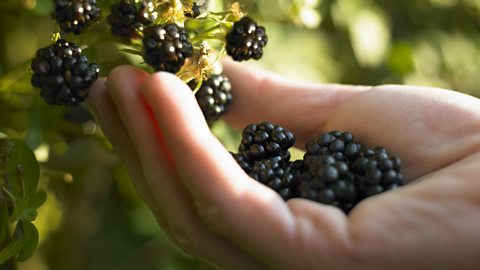
His experience of childhood summers spent picking fruit - only for the vast amount of it to rot - serves as a metaphor for life in general, where optimism and the focus on immediate pleasure are replaced by a natural conservatism and pessimism.
There is a clear theme of change in the poem, as Heaney looks back on his younger self through the eyes of an adult, to see how life has changed.
Here is an example paragraph using the PEER structure that deals with the imagery in the poem:
- (P) Heaney is convincing in his use of the extended metaphor, which brings to life his observation that childhood innocence must give way to adult realism. Just as the berries inevitably rot when picked from the bushes, we cannot escape the changes we go through when growing up.
- (E) After wildly picking every berry in sight, the persona and his friends return to the byre the next day, only to find the
glossy purple
berries have been transformed by arat-grey fungus
. It becomes apparent in that moment the berries are rotting and in the children’slust for picking
they have failed to consider what might happen to the fruit. - (E) By his use of the word
lust
, Heaney is suggesting the children pick the berries with a wild sense of abandon and their desire to collect them in as vast a quantity as possible is almost uncontrollable. The berries have been transformed fromglossy purple
- indicating life, vitality and freshness, to -rat-grey
– a colour associated ultimately with decay and death. In the context of the poem, this experience highlights the human condition itself, which can be summed up as the passage from innocence to experience. - (R) It is only when the children have seen what has happened as a result of their efforts that they accept life isn’t always fair. Heaney leaves the reader pondering the fact that change – whether in terms of the berries or life in general - is inevitable, no matter how unlikely it may seem at the time.
