Control of the heart rate
The heart beat
A cell that has become differentiated to carry out a particular function, eg red blood cell. cells in the right In the heart, the atria (plural) are the upper chambers which collect blood returning from the body (right atrium) or from the lungs (left atrium). generate electrical signals that make the heart contract independently of the Body system that includes the brain, spinal cord and nerves.. These specialised cells act as a A group of specialised cells that generates electrical impulses that pass through the heart muscle and make the heart contract. .
A wave of contraction spreads across the heart - to the left atrium and then to the The lower chamber of the heart that receives blood from the atrium and pumps it into arteries.. This enables the ventricles to contract together.
Artificial pacemakers
Sometimes, the rhythm of the heart's natural pacemaker process becomes disrupted - a person's heart beats abnormally. It can be abnormally slow or fast, or irregular.
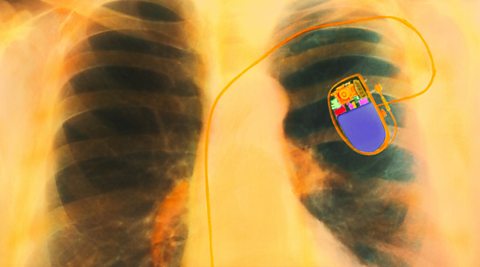
An A medical device that uses electrical impulses to regulate heart beats. is a small, battery-operated electronic device implanted in a person's chest that sends out regular, adjustable electrical impulses to produce normal contractions of the heart.
There are several types of artificial pacemaker, which have electrical leads connected to different chambers of the heart.
Wires are guided along a vein to the chamber of the heart that needs to be stimulated. The lead extends to the pacemaker, which is fitted between the skin of the upper chest and the chest muscle.
The fitting of artificial pacemakers is one of the most common types of heart surgery performed in the UK.