Propaganda posters and censorship
Propaganda
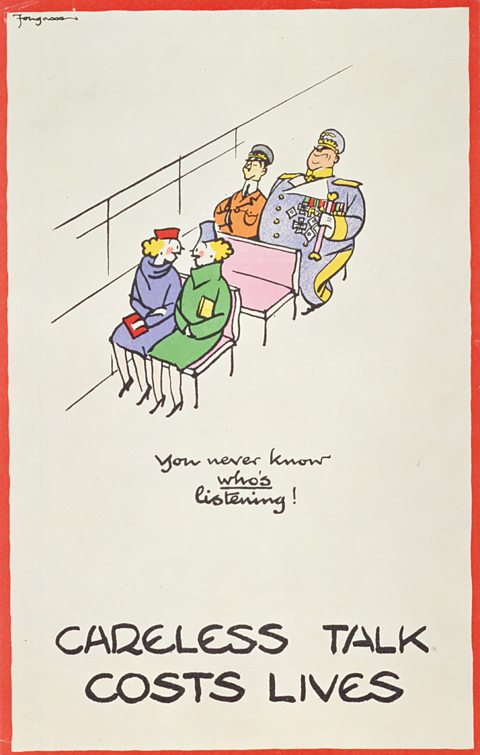
The Ministry of Information employed the best artists to produce Information, often biased or misleading, designed to persuade people to adopt a particular point of view. posters. The focus of these posters was to tell people what they needed to know about the war and to ensure they supported the war. By the end of the war, 3,000 people worked in the ministry.
Posters ranged from ones emphasising bravery and togetherness, the 'bulldog spirit', images encouraging men to sign up to fight and for women to work in munitions factories to join the war effort.
Posters were cleverly designed to promote the war effort. For example, housewives were instructed to 'make do and mend' instead of purchasing new items, and that careful use of food could help defeat Hitler.
Censorship
Censorship was used to control the messages people saw. Any negatives about the war were kept to a minimum.
Radio, newspapers, magazines, cinema films and newsreels were monitored or censored by the Ministry of Information.
- The Daily Worker, a pro-communist newspaper, was banned due to its negative comments.
- The Government considered censoring the broadcasts of the pro-Nazi William Joyce. He was an Irish American, and was called Lord Haw-Haw because of his posh voice.
- Military successes were exaggerated to make it look like the war was moving more in favour of an Allied victory.
