How tourism can reduce the development gap - Maldives case study
Tourism can be a good way for countries to bring in money. Many A country (as classified by the World Bank) having a gross national income per capita of US$1,026 to $12,475, eg Botswana. and Based on the World Bank's income classifications, a LIC has a gross national income (GNI per capita) of $1,045 or lower. benefit from A very hot, humid country or environment. climates, exotic ecosystems and beautiful landscapes. Tourists will travel to visit these locations. They spend a lot of money, which helps countries to develop.
Case study: The Maldives
The Maldives is a collection of nearly 1,200 islands in the Indian Ocean. Many of the islands are Not lived in. and none lie more than 1.8 m above sea level. The country is classified as a MIC.
The growth of tourism
The Maldives opened its first tourist A place used for leisure or relaxation and provides services for tourists. in 1972. Since then, COVID aside, tourism has increased significantly.
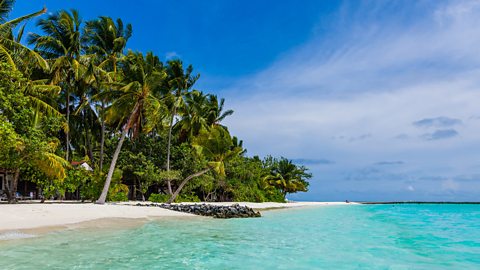
The majority of tourists come from Europe. They come to see the An underwater structure found in warm seas. reefs, clear blue seas and white beaches. Tourists spend over US $200 million per year, which means that tourism generates the biggest income for the country. Fishing is the second largest The type of work that people do., but this does not bring in as much money.
Managing tourism
Tourism in the Maldives is closely monitored by the government. The Ministry of Tourism keeps detailed records of tourists and manages numbers on uninhabited islands and coral reefs. Within 20 years, resort islands could make up about 20% of the Maldivian islands. The country needs tourists to visit, but the damage that tourists can do when large numbers of them visit fragile environments must be limited. The Ministry of Tourism has created rules, such as:
- for each island resort that is created, one island must be left as a reserve
- any new resorts must only be two storeys high
- only 20% of the land area of an island can be built upon
The impact of tourism
As a result of the income from tourism, gross national income - A measure of the total income of a country, divided by the number of people in that country. - in the Maldives is increasing. As much as 11% of the Maldives' population is employed in the tourism industry. Tourism generates around $600 million a year and makes up around 90% of the government's income from tax. This additional money has led to many improvements in the country. Advances in healthcare means that The average number of years a person is expected to live depending on where they live. has now reached 78 years.
There are also negative impacts of tourism in the Maldives. Foreign companies own many of the resorts, which means that a lot of money leaves the country. Some resorts are owned by Maldivian people and this has created a big divide between the richest and the poorest people in the country. Enrolment in education is decreasing and the country still has high levels of debt.
