What is cancer?
Normal body cells grow and divide to form new cells. Skin cells last a few weeks before they die and fall off the body as dust, brain cells can last an entire lifetime.
The chemicals that form the genetic code in the cells can be altered by ionising radiations. This can affect the way the cell divides and new cells may be formed before they are needed.
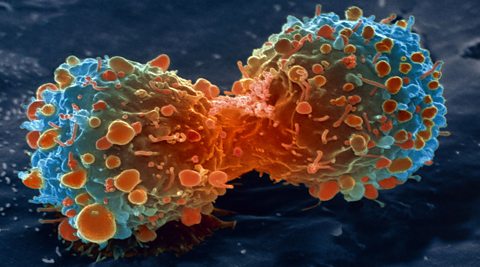
A large mass of tissue, containing these new unnecessary cells, is called a tumour.
Tumours may be benign. Benign tumours stay where they are and are relatively easy to operate on and remove.
A malignant tumour contains cells that break away and travel through the blood system to other parts of the body. These cells then go on to form new tumours and the cancer spreads.
Beams of The shortest wavelength and highest energy part of the EM spectrum. Produced by radioactive materials., called a gamma knife, can be used to destroy cancerous tumours deep inside the body. The beams are aimed at the tumour from many different directions to maximise the dose on the tumour but to minimise the dose on the surrounding soft tissue. This technique can damage healthy tissue, so careful calculations are done to establish the best dose – enough to destroy the tumour but not so much so that the healthy tissue is damaged.
