Nazi policy towards workers
Industrial workers
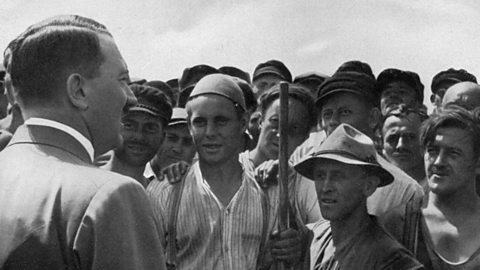
Before 1933 the Nazis had lacked support amongst the workers, who tended to vote for the communists or the Social Democratic Party. The needs of German rearmament made it important that workers were productive and controlled.
The Nazis set up three organisations that would manage German workers.
The Labour Front (DAF)
This was a Nazi organisation that replaced trade unions, which were banned. It set wages and nearly always followed the wishes of employers, rather than employees.
Strength through Joy (KdF)
This scheme gave workers rewards for their work - evening classes, theatre trips, picnics, and even very cheap or free holidays. The purpose of the KdF was to support the Führer and thank him and to keep everyone happy after abolishing the trade unions.
Dr Robert Ley was in charge of the KdF, and one of its popular schemes was the Volkswagen - the people's car. It was possible to pay for the car in instalments, and the buyer would only receive the car after they had paid the balance in full. When World War Two started in 1939, the car factories had to turn their attention to manufacturing arms. As a result, many Germans lost their money, and there were demonstrations against Ley.
Beauty of Labour
The job of this organisation was to help Germans see that work was good, and that everyone who could work should. It also encouraged factory owners to improve conditions for workers. The Beauty of Labour organisation improved conditions in some work places with improved canteens, toilets and sometimes even sports facilities.
The living standards of German workers in the non-armaments industries did not really improve under the Nazis. From 1933 to 1939:
- wages fell
- the number of hours worked rose by 15 per cent
- serious accidents in factories increased
- workers could be When a person is prevented from working in a particular industry. by employers for questioning their working conditions
