Continuation
Unity can be achieved by using continuing lines, edges and shapes to link together different areas and elements in a composition.
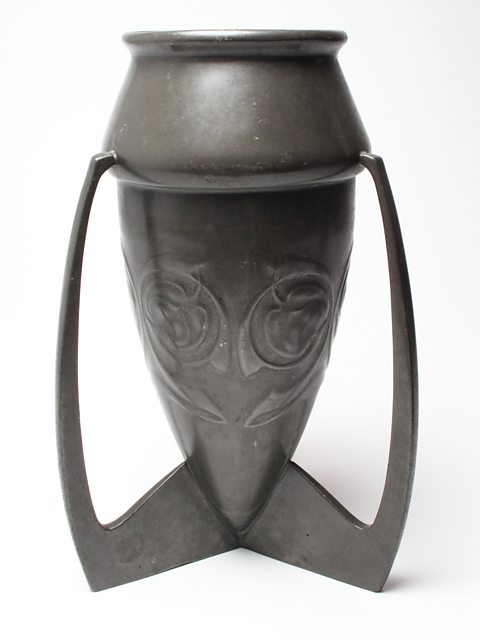
In this Art and design movement that began in Britain and was most widespread between the 1880s and 1910s. It had a focus on traditional craftsmanship and simple design. vase designed by Archibald Knox around 1902, continuation unites different parts of the vase.
The body of the vase widens out from the opening on top and this line is continued through the curving form of the supporting legs.
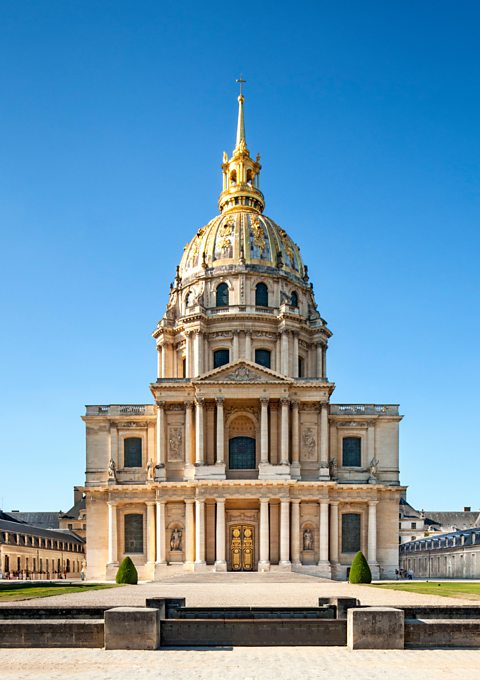
Continuity unites different parts of Hôtel National des Invalides in Paris (1671-76).
Columns form vertical lines that lead up from the ground to pillars around the base of the dome. These are continued as gold lines in the decoration of the dome that then lead up to the thin columns, spire and cross at the top of the building.
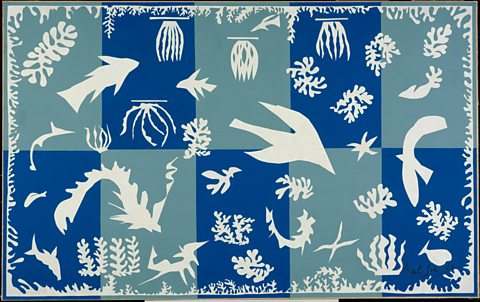
In Polynesia, The Sea (1946) Henri Matisse created simple shapes of birds, fish and sea life by cutting them out of white paper. Unity is created by the continuous blue grid that acts as a background to the other shapes. The sense of unity is added to by the seaweed shapes that join together forming a continuous border round the outside of the composition.
