The role of Hitler
The video below outlines the role of Hitler's public appeal in the Nazi rise to power.
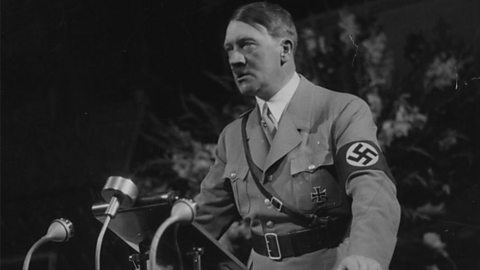
Hitler was a popular speaker
Despite the failure of the Munich Putsch in 1923, when Hitler tried to seize power by violent revolution, he was able to use his trial to make himself a national figure, publishing his ideas in Mein Kampf, his autobiography.
Hitler's charismatic and energised style helped the Nazi Party to be noticed and to gain votes:
- Hitler was a popular and effective public speaker at a time when politicians had to speak at public meetings on a regular basis.
- He used these meetings to tell many Germans what they wanted to hear – that there was a political party that would solve all their problems.
- He used simplistic language and short phrases to convey his message.
- He came across as energetic and passionate: someone who cared about the plight of the German people.
