Firing process
The firing process turns raw clay into ceramic through high-temperature heating. This usually happens in a A large, hot oven used to fire clay. Clay must be fired in a kiln in order for it to turn into ceramic. A kiln can reach temperatures of 1300°C (2500°F)..
Clay often goes through two types of firing - bisque firing and glaze firing.
Bisque
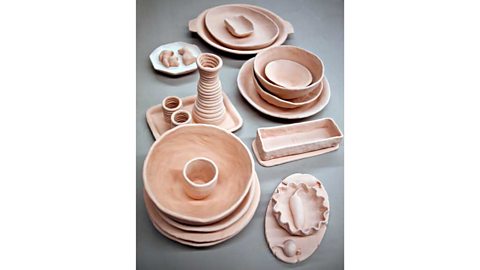
Bisque is the first stage of the firing process. This has to be done slowly because when clay is changing into ceramic it can crack and break.
Bisqueware is porous and isn’t functional, unless it is glazed. It can be painted, polished and varnished or left as a decorative item.
If the bisque is glazed, it will then need a second firing - the glaze firing.
Glaze
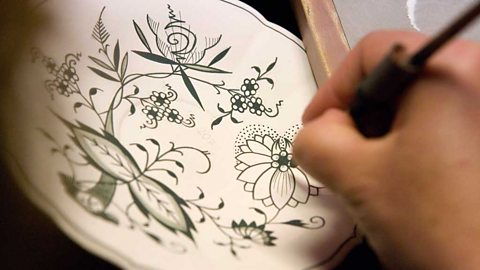
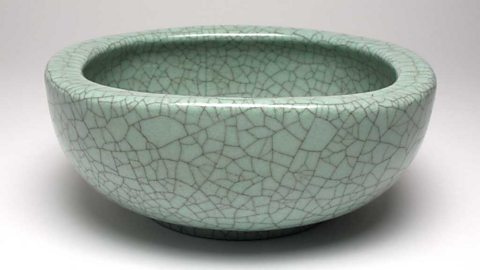
Glaze is like liquid glass - special materials are mixed with colour pigments. It can be sprayed, sponged or brushed onto the bisqueware, or the pots can be dipped into the glaze. It is used for decoration and waterproofing.
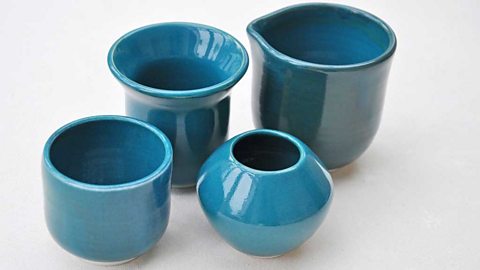
Image caption, Some glazes can produce a colourful, flat, smooth-looking surface
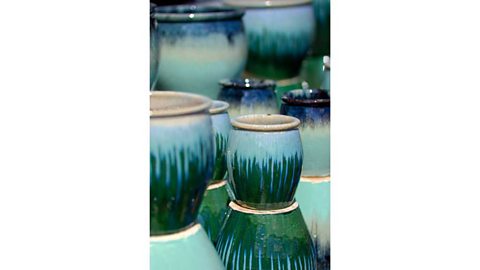
1 of 3
Oxides are a popular choice as they are effective and easy to use. They come in various colours in powder form. When mixed with water they can be brushed onto bisque-fired pieces.
