Factors affecting food supply
Global food supply is not even. Some places produce more food than others.
There are many reasons why some countries produce more food than others:
- Climate – global warming is increasing temperatures by around 0.2°C every 10 years. Rainfall is increasing in some places, but decreasing in others. Higher temperatures and unreliable rainfall make farming difficult, especially for those farming Land that is difficult to develop and yields little profit., who already struggle to survive. Even developed countries can be affected by drought. Countries such as Russia and Australia are huge exporters of wheat and barley respectively. When they suffer drought there is less food available globally and global food prices increase, leaving the poor most vulnerable.
- Technology – improvements in technology have increased the amount of food available. Technology can overcome temperature, water and nutrient deficiencies in the form of greenhouses, irrigation and fertilisers. A country with a gross national income per capita above US $12,735 (according to the World Bank) such as the Netherlands and the UK. (HICs) import food from across the globe, all year round. However, the growth of the A type of energy source derived from renewable plant and animal materials, eg ethanol (often made from corn in the United States and sugarcane in Brazil), biodiesel (vegetable oils and liquid animal fats) and biogas (methane from animal manure). market is taking up valuable farmland.
- Pests and disease – A chemical used to kill pests, such as the potato cyst nematode which is a pest that destroys potato crops. have increased crop yields. Farmers in wealthier countries can afford pesticides, whereas most farmers in poorer countries cannot afford them.
- Water stress – The channelling of water from rivers and streams to fields in order to help crops grow. systems provide water for countries with unreliable or low rainfall. Irrigation can double crop The mass of a crop produced. but it is expensive to put these systems in place. Water can be taken either from underground Naturally occurring underground water stores. or directly from rivers. Both have environmental consequences.
- Conflict – war forces farmers to flee their land or to fight in conflict. Food can be used as a weapon, with enemies cutting off food supplies in order to gain ground. Crops can also be destroyed during fighting. Food shortages have caused riots and conflict, eg the Darfur region has faced conflict for many years because of disagreements over land and This is when animals feed on grass. rights.
- Poverty – when people have less money, they cannot afford food and they become unable to work. Families in developing countries spend much of their income on food.
Impacts of food insecurity
When people have enough nutritious and affordable food to eat. is when the entire population of a country has access to enough safe and nutritious food to maintain an active life. The opposite is food insecurity which is a problem for lots of different countries. Countries that do not have enough food to feed everyone usually have other associated issues to overcome. Some impacts of food insecurity include:
- Hunger – caused by a lack of food. This can lead to Not having enough food to be able to grow and stay healthy., and in more extreme cases, An extreme lack of food that leads to large numbers of people starving to death.. According to the United Nations, around 828 million people across the world are affected by hunger.
- When earth is washed or blown away. - the removal of soil occurs more rapidly in areas that are very dry. Food insecurity can lead to soil erosion as farmers try to get more out of their land. The cutting down of trees and forests to allow a different land use., When land cannot sustain the number of animals that are feeding from it. and When land cannot sustain the amount of crops grown. expose the soil and make it vulnerable to erosion.
- Rising prices – when there is less food available, the prices of food increase. Global food prices increased by more than 30% during 2021, due to factors such as poor harvests, disruptions to supplies and political tensions. Poorer countries are more vulnerable to increasing food prices.
- Social unrest – everyone needs to eat and so when food supplies are low people have to fight for their survival. Riots in Venezuela in 2016 and 2017 sparked by three years of food shortages. Inflation rates in the country rose to over 250% in 2016. This meant that the prices of goods were more than doubling.
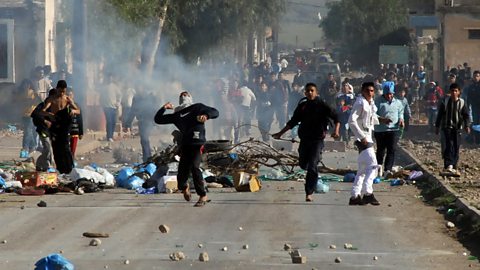
Riots in Algeria were sparked by high food prices.
