Spread of the CBD into the inner city zone
Redevelopments in inner city Glasgow
Redevelopments in inner city areas, particularly along the River Clyde, have allowed the CBD to spread. Old The area surrounding docks (a place where ships are located). at Anderston Quay is now the SECC and Pacific Quay is home to the IMAX Cinema and Science Centre. More recent developments include the Riverside Museum, BBC Scotland and the Hydro arena.
The inner city, or zone of transition, has undergone many changes over the past decades. There have been a number of programmes put in place to To improve an area e.g. by upgrading housing. the inner city areas of Glasgow. This has been on-going since the 1970s when many old heavy industries started to decline and close down.
Clyde Gateway Project
This project is focussed on Glasgow’s East End areas including Bridgeton, Dalmarnock and Parkhead. It began in 2007 and runs until 2028, as a partnership between Glasgow City Council, South Lanarkshire Council and Scottish Enterprise with funding from the Scottish Government.
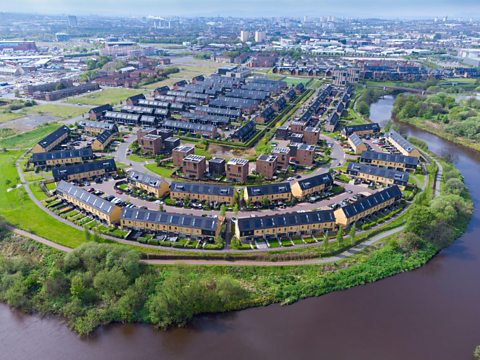
As part of the Clyde Gateway Project, significant investment was focussed on a 33 hectare site where infrastructure for the 2014 Commonwealth Games was required. The Athlete’s Village was built in Dalmarnock and after the event, these were converted into about 1,400 City Legacy Homes. Affordable, energy efficient homes were built (or refurbished) to lower energy bills.
To help maintain the heritage of the area, where possible, existing buildings were reused and upgraded. For example, the Olympia was converted from a theatre to offices. Fifty per cent of all derelict land has been regenerated and landscaped e.g. by planting trees to make it more appealing to residents.
New businesses have set up in the area and 150 local businesses are supported directly by the Clyde Gateway Project as new business and office spaces have been created. Police Scotland moved 1100 staff to a new £25 million Dalmarnock office in 2015.
Employment opportunities have been created with skills development and training through apprenticeships. Over 3000 new job opportunities e.g. in the Emirates arena, allows local residents to earn, which in turn means they are more likely to stay in the area and buy a home.
The Legacy Hub is a new and improved community centre to meet the demands of the community and it includes every day services such as a dentist, nursery and a café Housing associations such as West of Scotland Housing Association continue to receive government grants to build more affordable housing in this area.
Crown Street Regeneration Project
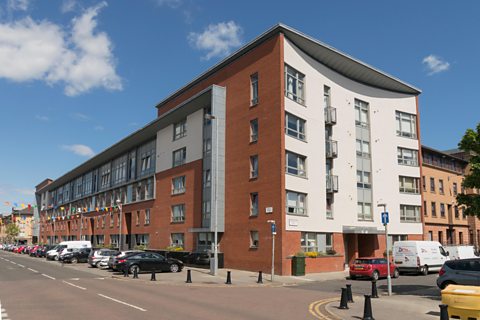
This programme began in the 1990s and focused on The Gorbals area of Glasgow. It involved replacing high rise and tenement flats with new lower density affordable housing. Some new tenement style housing was built to create a community spirit and high rise flats were demolished due to damp and antisocial conditions.
All housing was architecturally designed with some of them representing the area’s heritage. This attracted people with a higher income to move to the area, which increased the social and economic diversity.
Developments also included the building of a 'High Street' with local shops and A number of activities that serve the general public for different purposes e.g. restaurants and cinemas., to improve amenities in the area for local people.
An area of land that has been improved by planting grass, trees and other types of vegetation. and trees also helped to ensure the area was aesthetically pleasing and the use of public art both on the housing and street sculptures have helped to improve the attractiveness of the area. The Glasgow Club Gorbals leisure centre was built to improve health and well-being as well as life expectancy in the area.
Glasgow Harbour and Quayside
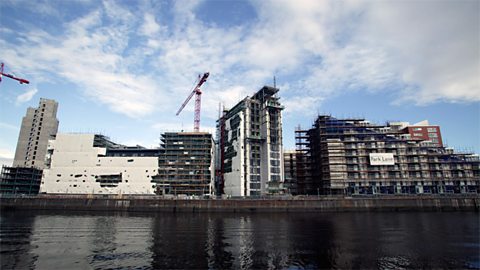
This programme began in the 1980s and focused on linear regeneration along the River Clyde. It has involved the development of new industry to replace the old A factory that builds ships. and docks. Initially, the SECC was built as a way of changing the income coming into the city, through visitors and business.
New developments in recent years include The Glasgow Science Centre, BBC Scotland, The National Transport Museum and The Hydro. The River Clyde is now multi-functional for tourists and includes The Tall Ship, and mini-cruises, as well as more traditional uses of transport and industry.
Modern apartments have been built to encourage more people to live in the city, including students and professionals. This helps to lower congestion and pollution levels.
Transport links over the River Clyde have been improved with the addition of the Clyde Arc (known as the Squinty Bridge). There has also been tree planting and landscaping to aesthetically improve the area and make it more environmentally friendly. Springfield Quay has been developed as a leisure outlet with restaurants, cinemas and ten-pin bowling to increase amenities in the area.
There are more planned developments outlined in The Glasgow City Development Plan for retail, leisure and commerce to help further improve this whole area, spread the regeneration along the river and ultimately enhance the city's economy.
