Reasons for the growth in support of the Nazi Party
In 1928, the Nazis had only 12 seats in the The name of Germany's parliament.; by July 1932 they had 230 seats and were the largest party.
The appeal of Hitler and the Nazis
The Nazis continued to put forward their 25-Point Programme agreed in the early 1920s and thus had broader social and geographical appeal than the A person or country which follows the left-wing ideas of Karl Marx about the redistribution of wealth., who only really appealed to the industrial workers in Germany’s cities. Support came from:
- wealthy businessmen: frightened by the increase in support for the communists, they began to finance Hitler and the Nazis
- the middle-class: alarmed by the obvious failure of A type of government where people govern themselves or elect representatives to govern for them., they decided that the country needed a strong government and gave their votes to Hitler
- nationalists: they blamed the legacy of the The peace treaty signed by the Allies and Germany at the end of the First World War, on 28 June 1919. and Monetary compensation from an individual, group or state to compensate victims. for causing the depression and so lent their support to the Nazis
- rural areas: Nazi support was particularly strong amongst both middle class shopkeepers and artisans, farmers and agricultural labourers
The effects of propaganda
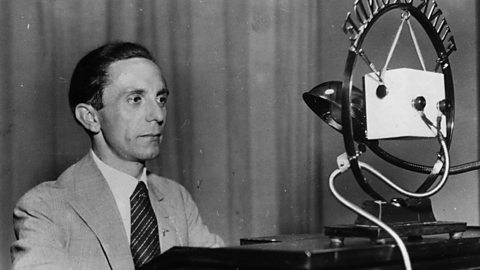
Nazi propaganda was controlled by Joseph Goebbels and had three mains themes:
- The Führer cult. Hitler was always portrayed as Germany’s saviour – the man who would rescue the country from the grip of depression.
- Volksgemeinschaft (people’s community). This was the idea that the Nazis would create one German community that would make religion or social class less relevant to people.
- Scapegoating the Jews (and others) for Germany’s ills. Jews were often portrayed as sub-human, or as a threat to both the racial purity and economic future of the country.
Hitler was a great speaker with an extraordinary power to win people over. Goebbels' propaganda campaign was very effective and brought huge support for the Nazis by targeting specific groups of society with different slogans and policies to win their support.
The work of the SA
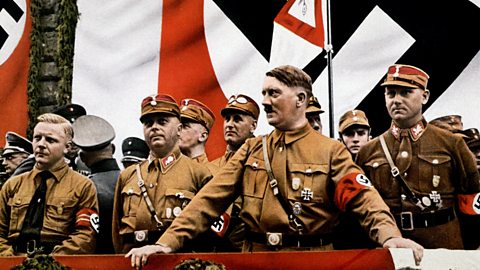
The Also known as Storm Troopers or Brown shirts. A military style organisation of the Nazi party formed in 1921 under Hitler. played a part in the Nazis’ increasing popularity by:
- intimidating the Nazis’ political opponents – especially the communists – by turning up at their meetings and attacking them
- providing opportunities for young, unemployed men to become involved in the party
- protecting Hitler and other key Nazis when they organised meetings and made speeches
