Pip in Great Expectations
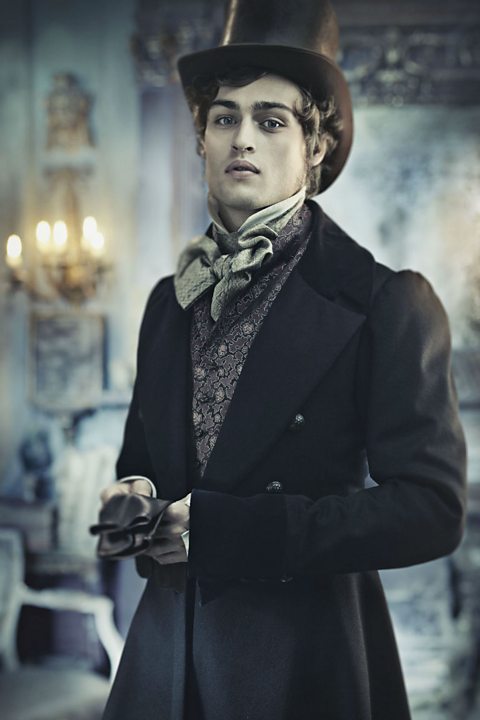
Pip is the The chief character in a literary work. of the novel Great Expectations. We follow his journey from being a poor young boy in the countryside to a well-to-do young man in London who moves in high society. Although he is always restless about improving his position, two things really encourage Pip in his efforts:
- his love for Estella - she is of a higher social class and he feels unworthy of her and therefore wishes to improve himself
- coming into money - this allows him to move upwards in society and become a gentleman
It is important to understand that Pip is fundamentally mistaken about both these things. He loves Estella but she cannot love him in return and the money comes from an unexpected and 'contaminated' origin.
Pip is basically a kind and helpful person. He is afraid of Magwitch but mainly helps him out of pity. Much later he makes sure that his friend Herbert has the money he needs to start up in business. However, he also goes through a phase in which he becomes a snob feeling ashamed of Joe, saying nasty things to Biddy, and showing off in front of his new rich friends. In the end though, he goes back to being an honest and decent young man who has learned lessons from his own behaviour.
Pip is also the The teller of a story; the voice in a text that describes or narrates the events of the plot. The narrator is often either a character in the story, or an authorial voice who gives a commentary on events but doesn't take part. who looks back at his younger self with a more mature eye. He is critical of the mistakes he made earlier and this helps the reader to sympathise with the central character.
| How is Pip like this? | Evidence | Analysis | |
| Sympathetic | Although he does not always show it, Pip at heart is both generous and caring. He helps Magwitch, feels sorry for Miss Havisham and worries about Joe. Later he helps Herbert to set up in business. | He was awfully cold to be sure. I half expected to see him drop down before my face and die of deadly cold. His eyes looked so awfully hungry too that when I handed him the file and he laid it down on the grass, it occurred to me he would have tried to eat it, if he had not seen my bundle. | One of Pip's first actions in the novel is to help someone else when he supplies the desperate convict Magwitch with a file and some food. He thinks about what it's like for the convict and how cold and hungry he is rather than about himself. |
| Unrealistic | Pip has romantic ideas about himself and his future and is often found daydreaming about events. As a child he has quite a vivid imagination but this can lead him astray. | Whenever I watched the vessels standing out to sea with their white sails spread, I somehow thought of Miss Havisham and Estella; and whenever the light struck aslant, afar off, upon a cloud or sail or green hill-side or water-line, it was just the same. | Pip's daydream reveals his poetic nature. Here, he associates them both with images of freedom: sails, clouds, water and sunlight. However he is actually wrong. The two women are virtual prisoners in their own home. They are surrounded by ruin and decay and sunlight is shut out of their home. |
| Passionate | Pip generally stands up for what he believes in. He goes to great lengths to achieve his goals and he pursues his love for Estella with intensity. | I loved her against reason, against promise, against peace, against hope, against happiness, against all discouragement that could be. Once for all; I loved her nonetheless because I knew it, and it had no more influence in restraining me, than if I had devoutly believed her to be human perfection. | Pip is carried away by his obsession with Estella. The repetition of the word 'against' shows how Pip basically knows he may be fooling himself but that he cannot help being in love with her. |
| Sympathetic | |
| How is Pip like this? | Although he does not always show it, Pip at heart is both generous and caring. He helps Magwitch, feels sorry for Miss Havisham and worries about Joe. Later he helps Herbert to set up in business. |
| Evidence | He was awfully cold to be sure. I half expected to see him drop down before my face and die of deadly cold. His eyes looked so awfully hungry too that when I handed him the file and he laid it down on the grass, it occurred to me he would have tried to eat it, if he had not seen my bundle. |
| Analysis | One of Pip's first actions in the novel is to help someone else when he supplies the desperate convict Magwitch with a file and some food. He thinks about what it's like for the convict and how cold and hungry he is rather than about himself. |
| Unrealistic | |
| How is Pip like this? | Pip has romantic ideas about himself and his future and is often found daydreaming about events. As a child he has quite a vivid imagination but this can lead him astray. |
| Evidence | Whenever I watched the vessels standing out to sea with their white sails spread, I somehow thought of Miss Havisham and Estella; and whenever the light struck aslant, afar off, upon a cloud or sail or green hill-side or water-line, it was just the same. |
| Analysis | Pip's daydream reveals his poetic nature. Here, he associates them both with images of freedom: sails, clouds, water and sunlight. However he is actually wrong. The two women are virtual prisoners in their own home. They are surrounded by ruin and decay and sunlight is shut out of their home. |
| Passionate | |
| How is Pip like this? | Pip generally stands up for what he believes in. He goes to great lengths to achieve his goals and he pursues his love for Estella with intensity. |
| Evidence | I loved her against reason, against promise, against peace, against hope, against happiness, against all discouragement that could be. Once for all; I loved her nonetheless because I knew it, and it had no more influence in restraining me, than if I had devoutly believed her to be human perfection. |
| Analysis | Pip is carried away by his obsession with Estella. The repetition of the word 'against' shows how Pip basically knows he may be fooling himself but that he cannot help being in love with her. |
Social and historical context
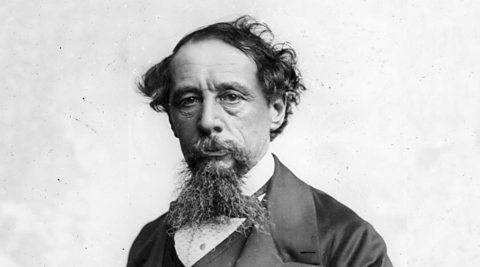
Like Pip, Dickens himself had a hard upbringing. His father was imprisoned for debt and at one stage Dickens had to work in a factory – something of which he was ashamed for the rest of his life. Dickens raised his social position through hard work and self-education; this is also something which Pip eventually does in the novel.
Analysing the evidence
I set off on the four-mile walk to our forge; pondering, as I went along, on all I had seen, and deeply revolving that I was a common labouring-boy; that my hands were coarse; that my boots were thick; that I had fallen into a despicable habit of calling knaves Jacks; that I was much more ignorant than I had considered myself last night, and generally that I was in a low-lived bad way.
Question
Why are these thoughts key to Pip's future character and actions?
How to analyse the quote:
'I set off on the four-mile walk to our forge; pondering, as I went along, on all I had seen, and deeply revolving that I was a common labouring-boy; that my hands were coarse; that my boots were thick; that I had fallen into a despicable habit of calling knaves Jacks; that I was much more ignorant than I had considered myself last night, and generally that I was in a low-lived bad way.'
- 'four mile walk' - Pip has plenty of time to think about the issues as he travels between the world of Satis House and the world of the forge
- 'deeply revolving' - this indicates how intensely and continuously Pip is thinking about these things and how they keep going round in his head
- 'common' / 'coarse' / 'thick' / 'despicable' / 'ignorant' / 'low-lived' / 'bad' - the negative vocabulary demonstrates Pip's very low opinion of himself at this point in the novel
How to use this in an essay:
Up until meeting Miss Havisham and, especially, Estella, Pip is mostly content with his position in life. However, he now wants to impress the young girl and so thinks about what he considers to be his faults. During his 'four mile walk' home he has plenty of time to think about the issues as he travels between the world of Satis House and the world of the forge. These cover his personal appearance, his clothes, his background, his lack of education and his poor use of language. The use of negative vocabulary ('common' / 'coarse' / 'thick' / 'despicable' / 'ignorant' / 'low-lived' / 'bad') demonstrates Pip's very low opinion of himself. The fact that he is 'deeply revolving' these points indicates how intensely and continuously Pip is thinking about his future and how things keep going round in his head. From this moment on, Pip is going to try to improve and raise himself up the social ladder. When he comes into his money, this only strengthens his desire to improve but the balance tips too far. He becomes a snob who spends money recklessly in an effort to impress others and who neglects his true family. It is a long while before Pip realises what he has done and asks for forgiveness.
