Form, structure and language
Form
The poem is written in the The 'I' or 'we' used by a narrator who is a participant in a narrative, in contrast to the third person - 'he', 'she' or 'they' - of a narrator who is not directly involved. and in the present The verb formation that describes the time at which the action occurred, eg past, present or future. which makes it sound intimate and immediate. This places the reader in a position of uncertainty. The poem appears to be a piece of autobiographical, confessional writing, but the reader can never be sure. The speaker could equally be a made-up character.
Structure
The poem is made up of mostly three-line unrhymed Lines of poetry that make up a section; a verse.. Full-stops often break up a line into short, jabbing phrases, often with single words. It is as if the speaker’s attention is unable to focus because of the anxiety of waiting and she seems to constantly jump from one thought to another. The final stanza has four lines. The short, A word consisting of a single sound. final line ‘I don’t know what’ shows the speaker’s confusion and perhaps suggests she is giving up hope for this relationship.
There is no consistent rhythmical pattern. This perhaps mirrors the speaker’s own inconsistent train of thought, where one anxiety replaces another in increasing frustration. The lines do not rhyme, but there are several instances of repetition (‘sirens’, ‘happen’/’happening’, ‘what’) which echo the thoughts going round and round in the speaker’s head.
Language
The narrator’s jumpy state-of-mind is signalled by A question asked just for effect with no answer expected., ‘Who would ring me to tell?’ and ‘What?’. The impression given is of a nervous woman who is first talking to herself and then supplying the answers.
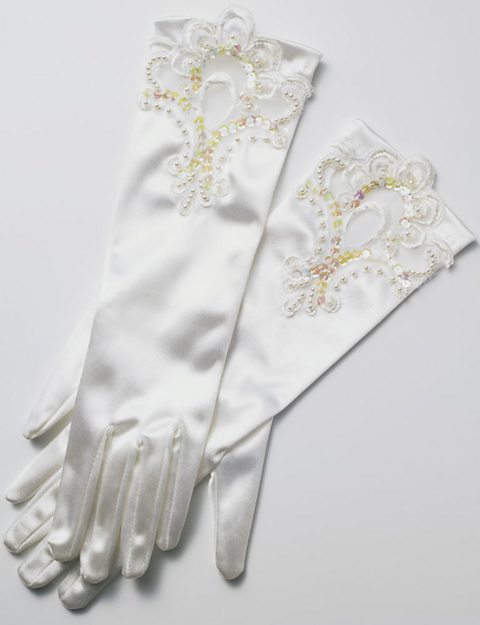
Kay uses a number of A comparison made without using 'like' or 'as', eg 'sea of troubles' and 'drowning in debt'. to describe the future, including ‘a long gloved hand’ and ‘an empty cup’. These two images are Something that could be interpreted in more than one way. and raise questions in the reader’s mind. Do they suggest luxury and domestic bliss? Or something hidden and unfulfilled?
The comment about a ‘stranger’s white sheets’ is also ambiguous. This could refer to the fact the couple have a secret relationship and only meet once a week in someone else’s bed, or could refer to an alternative future where the speaker has casual relationships with others, rather than settling down with her current lover. The tangling sheets are given a human characteristic - they are ‘lonely’.
Throughout the poem, the speaker comments on her situation with self-mocking A literary device where there is a mismatch between the actual meaning and what is implied (sarcasm is a heavy form of irony). Dramatic irony is where the audience knows something crucial of which characters are blissfully unaware.. She acknowledges her absurd behaviour, ‘I know this is not a good idea’, even as she continues with it. She uses Over-the-top exaggeration for effect. to show how ridiculous her actions are, claiming to ‘assault’ the postman and dress up to impress the silent phone. The ‘sirens’, she imagines, are an absurd over-reaction.
