The effects of propaganda
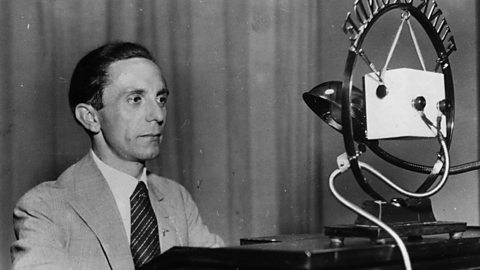
Joseph Goebbels
Nazi propaganda was controlled by Joseph Goebbels and had three main themes.
- The Führer cult. Hitler was always portrayed as Germany’s saviour – the man who would rescue the country from the grip of depression.
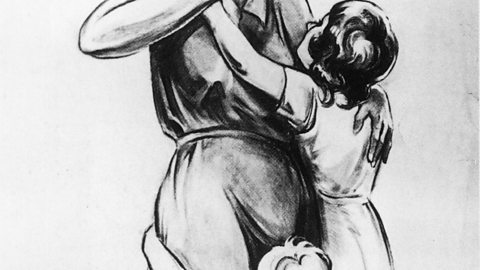
- Volksgemeinschaft (people’s community). This was the idea that the Nazis would create one German community that would make religion or social class less relevant to people.
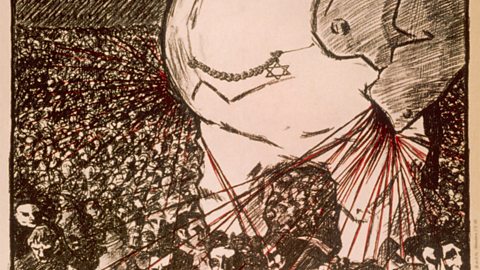
- Scapegoating the Jews (and others) for Germany’s ills. Jews were often portrayed in Nazi propaganda as sub-human, or as a threat to both the racial purity and economic future of the country.
Hitler is considered to be a great speaker with an extraordinary power to win people over. Goebbels' propaganda campaign was very effective and brought huge support for the Nazis by targeting specific groups of society with different slogans and policies to win their support.
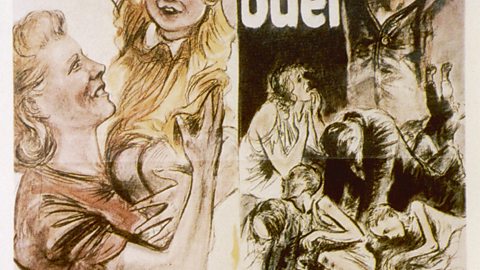
Propaganda was delivered in a number of ways - newspapers, posters, radio and news films in the cinemas. The messages were simple, and resonated with public mood at the time.
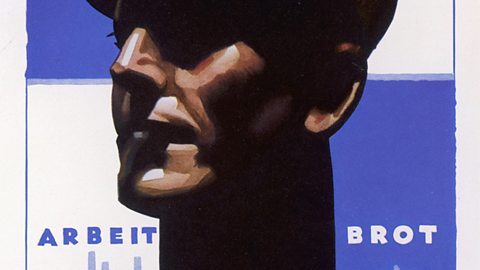
Image caption, Propaganda poster 1
'Work means bread'
1 of 4
End of image gallery
