Smart materials
While smart materials are modern materials, modern materials are not necessarily smart.
In other words, they change when you do something to them, and when you remove what is causing that change they return to their original form.
Shape-memory alloys (SMA) are metal An alloy is a mixture of two or more elements, at least one of which is a metal. that can remember their shape when heated. These alloys have been utilised on spectacle frames that spring back to shape if they are squashed.
Nickel titanium A smart metal composed of nickel and titanium that contracts when heated or exposed to an electrical current. is a type of SMA, and it contracts when heated, whereas most metals expand. When braces are made from nitinol, they heat up in the mouth and ‘pull’ on the teeth, so they move with the nitinol.
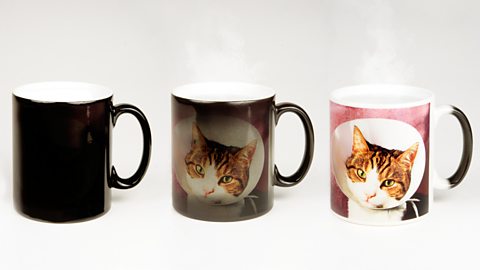
A temperature-sensitive pigment that changes colour when heated. change colour when their temperature changes. The term ‘thermo’ relates to heat, and chroma means colour - so thermochromic pigments change colour when they are heated up. These pigments can be mixed with paint or A large molecule formed from many identical smaller molecules known as monomers. to give the materials the same colour-changing The mechanical, physical or optical properties of materials that define how they behave in use. as the pigment. You may have seen this technology on colour-changing mugs or bath items for children.

Image caption, Body temperature can cause a reaction in thermochromic pigments
1 of 2
Photochromic pigments work in a similar way but 'photo' refers to light - so these pigments change their properties when exposed to Electromagnetic radiation with a greater frequency than visible light but less than X-rays. Humans cannot see it but it can damage eyes and skin in high doses.. A well-known example would be photochromic lenses in glasses, where the lenses are clear when worn inside a building, but become more like sunglasses when exposed to bright sunlight outside. There are several benefits to this, including:
- protecting the person’s eyes from harmful UV light
- saving money as they don’t need two pairs of glasses
The same technology has been used in windows to prevent rooms from getting too hot in warm weather.
Electroluminescent film or wire, ie LCD, is a thin copper wire that is coated in A luminescent (light-emitting) substance., which glows brightly when a current is applied to it. It is commonly used in fancy dress and decorative luminescent clothing, nightlights, waterproof displays, medical tool display screens and billboards.
Quantum-tunnelling composite (QTC) is an To help maintain the temperature. rubber containing tiny particles of metal. When squashed, the metal particles meet and allow the flow of The movement of electrically charged particles, for example, electrons moving through a wire or ions moving through a solution.. As a result, QTC is an Material that is a poor conductor of electricity or heat. when resting and a A material which allows charge to move easily through it. when pressure is applied. It is often used in outdoor applications where water might otherwise damage tiny An electric switch that is actuated by very little physical force through the use of a tipping-point mechanism, sometimes called an 'over-center' mechanism.. It has been used in clothing to control smartphones and portable music players, in power tools to give variable speed controls and in touch-sensitive pads.
Self-healing materials have the ability to repair themselves, which can extend the lifespan of the products that use them. These include A large molecule formed from many identical smaller molecules known as monomers. that can heal knife cuts in themselves, metals that resist The destruction of a metal by oxidation or chemical action, eg rusting. and concrete that can heal when cracked.
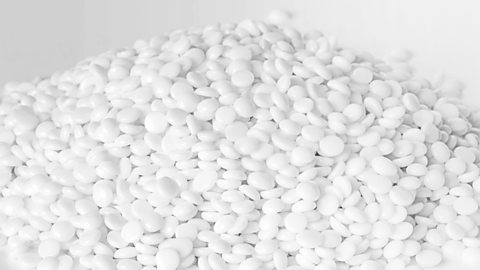
Polymorph is a A large molecule formed from many identical smaller molecules known as monomers. that becomes Capable of being hammered or pressed into a new shape without being likely to break or return to the original shape. when heated to about 62°C. When it cools down it becomes hard enough to drill and cut. This makes it perfect for modelling as it can be reheated and formed again. It is also excellent for creating ergonomic handles.
Modern and smart materials are constantly being engineered, so it’s good to try to keep up to date with the latest developments. They can often be incorporated into new consumer products without people noticing.
