Internal migrants
In 2022, there were around 295.6 million rural migrant workers in China - more than one third of the workforce (Source: National Bureau of Statistics of China).
This number had steadily increased with the exception of 2020, due to the impact of the Covid-19 pandemic. These people play an important role in the urbanisation, modernisation and economic growth of China. Many are employed in manufacturing and construction, although they are not treated equally in the workforce.
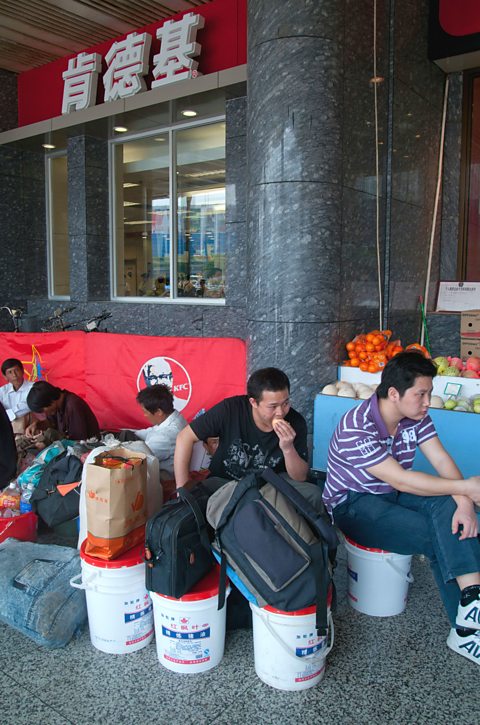
Many face discrimination and unfair treatment. As a result many suffer poor physical and or mental health. (Source: National Library of Medicine – US Government)
Migrant workers often must leave the countryside to find work. This can have a huge impact on their families. If they take their children with them, it can be hard to get them into good quality education in the cities, but if they leave their children in their rural hometown (with extended family), parents and children spend extended periods of time separated. (Source: China Development Brief)
Hukou system
Every Chinese citizen has a hukou, an official identification card, which shows where they are registered to live. The hukou is based on the province or region where someone is registered, and whether they are an agricultural (rural) or non-agricultural (urban) worker. Generally, citizens are not allowed to move from one province to another or from rural to urban areas.
A large number of migrants relocate from country to cities without formal authorisation. Official approval is generally only granted when a person gets a job or marries someone from another region.
Unauthorised migration can mean denial of benefits like free education and access to medical and social services.
