Glasnost and Perestroika
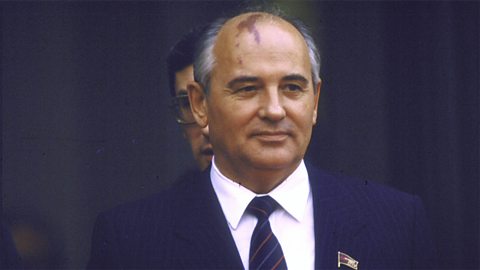
In 1985 Mikhail Gorbachev became Soviet leader. He realised that the USSR could no longer compete with the USA in the arms race, if the Soviet economy was to survive.
Soviet problems
The Soviet economy
Gorbachev wanted to modernise the USSR. He needed to stop so much money being spent on the arms race, so needed to improve relations with the USA.
Living standards in the USSR were falling while in the West they were rising rapidly.
Commitment to wider communism
The USSR was struggling to keep fighting Afghanistan, as well as keeping troops in Eastern Europe and supporting communist regimes in countries such as Cuba.
Opposition to communism
Many Eastern European countries wanted to be free from the USSR.
Gorbachev introduced policies of glasnost and perestroika in an attempt to make communism work in the USSR.
The video below explains the differences between the two terms glasnost and perestroika and then goes on to describe the effects of these new concepts.
Glasnost
This was an attempt to be more ‘open’ in dealing with the West. Gorbachev encouraged more freedom of speech - he wanted communist politicians to stamp out corruption.
Perestroika
This was an attempt to modernise and ‘rebuild’ the Soviet state. Gorbachev realized that military spending had to be reduced. In February 1989 the USSR withdrew its troops from Afghanistan ending nine years of occupation.
Government reports had also informed Gorbachev that if the economy was to survive, an increase in small, private businesses was needed.
