Lighting
Controlling lighting
A guide to exposure settings on your camera
In photography, Not from a natural source like sunlight such as flash or spotlights can give more control over the end result.
How a subject is lit can have a dramatic effect on the final image. This can depend on:
- how strong the light is
- whether it is direct or indirect light
- whether the light comes from above, below, in front, side-on or from behind
- the colour of the light
Most cameras have a light meter in them to help decide on the exposure settings needed for the conditions. However, Exposure to not much light, creating a darker image or The result of too much light hitting the film or sensor can also achieve a desired effect.
ISO settings
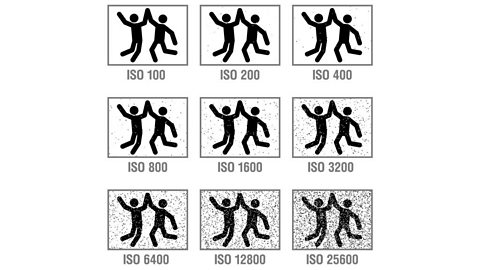
In analogue photography ISO refers to how sensitive the film in the camera is to light. The same scale is now used in digital photography to describe the light sensitivity of the chip.
A higher ISO makes the chip or film more sensitive, so a photograph can be taken with less light. At higher ISO settings an image is more likely to be affected by digital noise or grain - this can be used intentionally.
An ISO of 200 is the average daylight setting.