Apostles’ Creed
A creed is a short statement of key Christian beliefs.
Creeds express and make clear the most important Christian beliefs, including the nature of God. The congregation often recites them during acts of worship, usually standing.
The Apostles’ Creed is accepted by Catholics and Protestants. According to legend it was written by the The primary disciples of Jesus., although this is generally not accepted today.
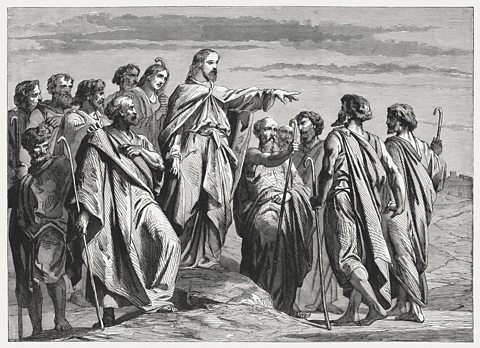
An illustration depicting Jesus with the twelve apostles (1886)
I believe in God, the Father Almighty, creator of heaven and earth. I believe in Jesus Christ, his only Son, our Lord, who was conceived by the Holy Spirit, born of the Virgin Mary, suffered under Pontius Pilate, was crucified, died and was buried; He descended to the dead. On the third day he rose again; he ascended into heaven, he is seated at the right hand of the Father, and he will come to judge the living and the dead. I believe in the Holy Spirit, the holy catholic Church, the communion of saints, the forgiveness of sins, the resurrection of the body and the life everlasting. Amen.
The Apostles' Creed represents a summary of Christian belief about the following:
- the oneness of God and the Three Persons in one God: Father, Son and Holy Spirit.
- the The belief that God took human form in Jesus Christ. It is also the belief that God in Christ is active in the Church and in the world. of Jesus Christ as the Son of God
- the meaning of the Roman method of execution by nailing someone to a cross, often until they die of asphyxiation; used on Jesus and many others., The rising of Christ from the dead, three days after the crucifixion. and For Christians, when Jesus went up to Heaven 40 days after he rose from the dead.
- the person and work of the The third element of the 'Trinity' (God is the Father, the Son and the Holy Spirit). The Holy Spirit is active as God's presence and power in the world.
- the Church as the body of Christ
- the The fellowship and union of members of the Christian Church, alive and dead. Each member helps the others.
- sin and the means of To be saved from sin and its consequences by the death of Jesus.
- judgement and the world to come
