Introduction
Vladimir Propp was a folklorist researcher interested in the relationship between characters and The way the events in a story are put together and presented to the audience..
Propp argued that stories are character driven and that plots develop from the decisions and actions of characters and how they function in a story.
He claimed characters could be classified into certain roles that progress a story.
These roles are:
Image caption, Type: the Villain
Role: struggles to stop the hero in their quest
1 of 7
Non-fiction
Propp's ideas are also relevant in non-fiction print texts like newspapers which often portray politicians as villains if their decisions or policies aren't popular with the public. When someone has done a good deed for charity or helped in a daring rescue, newspapers often portray them as heroes.
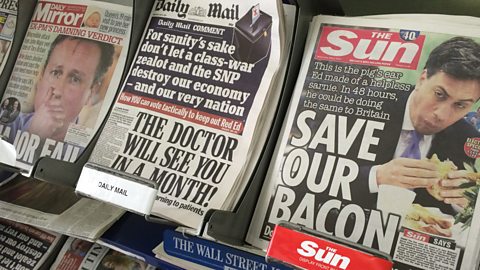
Newspaper front pages from May 2015
