Case study: the red mud of Hungary
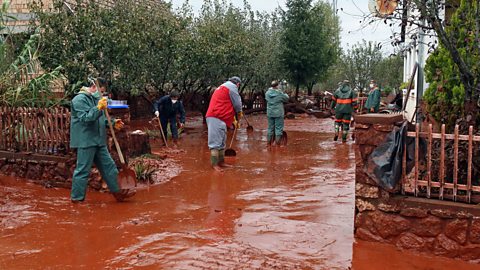
In October 2010, a large river of toxic red mud flowed through areas of Hungary. The mudflow was two metres high and covered an area 40 sq km. One million cubic metres of To do with work, often manufacturing or making things. waste was released into the area.
Causes of the disaster
- The A structure built to slow down or stop the flow of a river. This creates a large lake or reservoir, which can be used for water supply, leisure or electricity generation. collapsed because of high rainfall.
- The reservoir contained industrial waste material stored from a nearby A rock that can be used to make aluminium. factory.
- The factory producing the waste may not have been properly maintained.
Impacts from the disaster
- Nine people died, 120 were injured.
- The chemicals released into the water killed fish and other wildlife.
- The The acidity level of something. A low pH level shows acidity and a high pH level shows alkalinity. of the mud was high enough to cause chemical burns.
- Seven towns and around 7,000 people were affected.
- The topsoil in agricultural areas was left When something is unclean or in some cases toxic..
