The eye
Greg Foot demonstrates how the eye works and what happens if someone is long- or short-sighted
The eye is a sense organ containing Organs which recognise and respond to stimuli. sensitive to light intensity and colour. There are a range of tissues in the eye that work together to allow it to carry out its function.
| Part | Structure | Function |
| Cornea | Tough, transparent covering over the front part of the eye. Convex in shape. | Refracts light as it enters the eye (by a fixed amount). |
| Iris | Coloured part of the eye that contains muscles. These relax or contract to adjust the size of the pupil. | Controls how much light enters the pupil. |
| Pupil | Hole in the middle of the iris. | Allows light to pass through as it enters the eye. |
| Lens | Transparent, bi-convex, flexible disc behind the iris. It is attached to the ciliary muscles by the suspensory ligaments. | Refracts light to focus it onto the retina. The amount of refraction can be adjusted by altering the thickness and curvature of the lens. |
| Ciliary muscles | Muscles connected to the lens by suspensory ligaments. | Adjust the shape of the lens to make it more or less curved, so as to increase or decrease the refraction of light. |
| Suspensory ligaments | Connect the ciliary muscles to the lens and hold the lens in place. | Slacken or stretch as the ciliary muscles contract or relax, to adjust the thickness and curvature of the lens. |
| Retina | The lining of the back of eye containing two types of light receptor cells (rods and cones). | Contains the light receptors, which trigger electrical impulses to be sent to the brain when light is detected. |
| Part | Cornea |
|---|---|
| Structure | Tough, transparent covering over the front part of the eye. Convex in shape. |
| Function | Refracts light as it enters the eye (by a fixed amount). |
| Part | Iris |
|---|---|
| Structure | Coloured part of the eye that contains muscles. These relax or contract to adjust the size of the pupil. |
| Function | Controls how much light enters the pupil. |
| Part | Pupil |
|---|---|
| Structure | Hole in the middle of the iris. |
| Function | Allows light to pass through as it enters the eye. |
| Part | Lens |
|---|---|
| Structure | Transparent, bi-convex, flexible disc behind the iris. It is attached to the ciliary muscles by the suspensory ligaments. |
| Function | Refracts light to focus it onto the retina. The amount of refraction can be adjusted by altering the thickness and curvature of the lens. |
| Part | Ciliary muscles |
|---|---|
| Structure | Muscles connected to the lens by suspensory ligaments. |
| Function | Adjust the shape of the lens to make it more or less curved, so as to increase or decrease the refraction of light. |
| Part | Suspensory ligaments |
|---|---|
| Structure | Connect the ciliary muscles to the lens and hold the lens in place. |
| Function | Slacken or stretch as the ciliary muscles contract or relax, to adjust the thickness and curvature of the lens. |
| Part | Retina |
|---|---|
| Structure | The lining of the back of eye containing two types of light receptor cells (rods and cones). |
| Function | Contains the light receptors, which trigger electrical impulses to be sent to the brain when light is detected. |
The retina
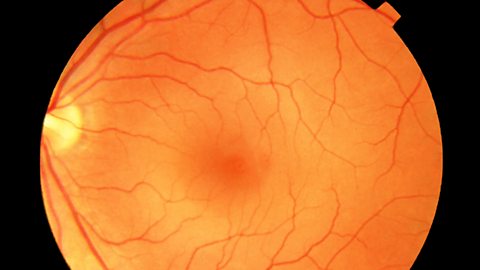
A photograph of a human retina seen through the eye
The pupil reflex
The amount of light entering the eye is controlled by a Automatic and rapid response to a stimulus. . The size of the pupil changes in response to bright or dim light. This is controlled by the muscles of the iris.
1 of 2
End of image gallery
Learn more about the eye with Dr Alex Lathbridge.
Listen to the full series on BBC Sounds.
Dr Alex Lathbridge breaks down the structure of the brain and the eyes.
More guides on this topic
- How do substances get into, out of and around our bodies?
- How does the nervous system help us respond? - OCR 21st Century
- Why do we need to maintain a constant internal environment?
- What role do hormones play in human reproduction? - OCR 21st Century
- Sample exam questions - the human body - staying alive
