Movements that define characters
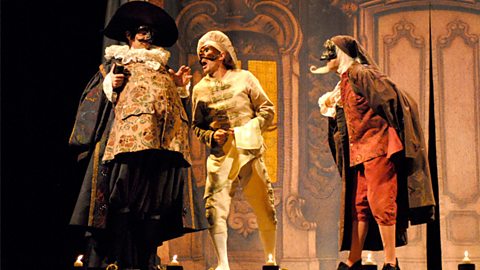
Commedia dell’arte was a form of theatre that began in Italy in the 16th century. It uses stock characters or types that are defined by certain characteristics, particularly comedic movement. This idea of using a An assumption based only on a general expectation. movement to define a character can be rewarding in some of your own work, particularly comedy. Look out for influences such as these when you’re describing body movements in a production. For example, the National Theatre’s acclaimed production of One Man, Two Guvnors was influenced by Commedia dell’arte.
Physical mannerisms
A realistic well-rounded character may have a distinct physical mannerism, something that’s unique to them. Salty from John Godber’s play, Teechers for example may shove his hands deep in his pockets and shift from foot to foot to show his energy and restlessness.
A nervous habit of scratching your nose, a vain flick of the hair or an exaggerated limp are all possible ideas to build a character’s mannerisms. Think of familiar character types on stage or on screen and the mannerisms or movement that define them. How would television’s Mr Bean character change if he didn’t have his rubbery facial expressions and clumsy body movements?
