More camera movement techniques
Handheld camera
In a handheld shot the camera is carried by the camera operator.
This technique lacks the smooth motion of a tracking shot but it gives the camera operator greater freedom to follow the action of a scene.
Because this technique gives scenes a bumpy and unpolished feeling it is often used by directors when they want viewers to feel embedded in the action of a scene.
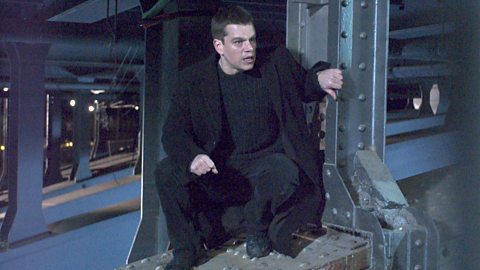
The Bourne Supremacy (2004) makes particularly good use of handheld shots to make the action more exciting and unpredictable.
The directors of realist dramas also sometimes use handheld camera to make us feel as if we are participating in or eavesdropping on everyday conversations.
Crane shots
In a crane shot the camera is mounted to a crane and can move up or down.
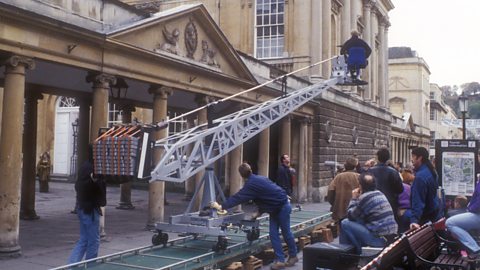
Crane shots are usually used for dramatic effect, making us feel as if we are swooping over a location or diving down from above.
Zoom shots
A zoom lens is a type of camera lens with an adjustable focal length.
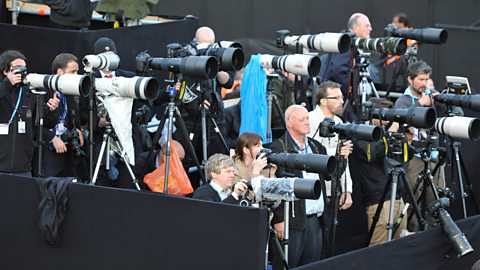
Without moving the camera, the lens can be turned or adjusted to make objects or people appear closer to the camera.
Most standard camcorders come with a zoom function. A shot which uses the zoom lens to suddenly push us closer to or further away form a subject is called a zoom.
Zooms can be effective if used creatively but can also seem amateurish and distracting if overused.
Aerial shots
In an aerial shot, the camera is mounted to a flying vehicle and flown over the action or location.
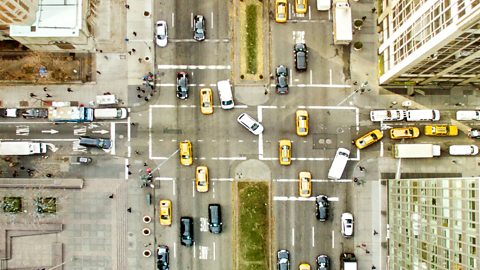
Aerial shots are often used at the start of a film to establish setting and create a sense of mood.
Traditionally helicopters were used to create these shots and aerial footage was seldom seen outside of big budget films.
The rise of drones, however, have allowed more filmmakers to use this technique.
