Franz Joseph Haydn
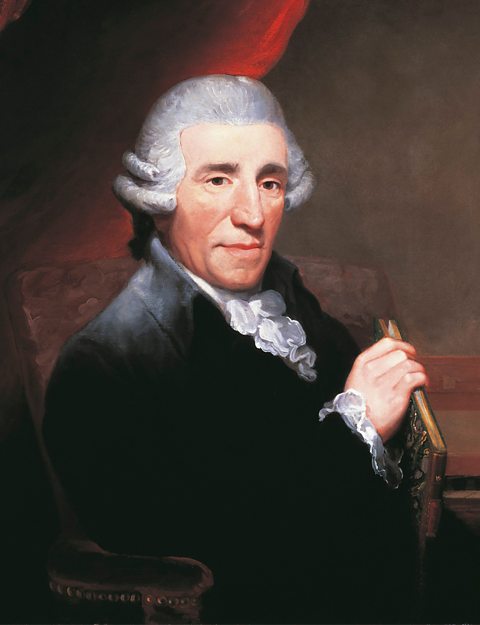
Franz Joseph Haydn is one of the most important composers from the 1750 - 1825. . He composed many works including A long composition for the orchestra, typically featuring four movements. , A composition that has three movements - fast, slow, fast., string Music written for four players., piano trios, operas and A setting of religious words for soloists, chorus and orchestra.. Haydn was a key figure in establishing the forms and styles for the string quartet and the symphony. During his lifetime, Haydn composed over one hundred symphonies.
Haydn’s musical gift was recognised by his parents at a young age. To provide him with the best musical training, they sent him away to live with a relative who was a teacher and choirmaster. During this time, Haydn sang in the church choir and learned to play a number of instruments.
In 1740, Haydn moved to Vienna where he worked as a chorister and received very little training in music theory or composition. In order to broaden his knowledge, Haydn studied the work of other composers, especially that of Carl Philipp Emanuel Bach.
Haydn was employed as a freelance composer for the court in Vienna between 1754 and 1756 before working as A German term for a person who makes music. for European aristocracy. He then went on to work under the patronage of a wealthy family until his death in 1809.
