Montgomery Bus Boycott 1955
Causes
In December 1955, Rosa Parks was returning home from work on a bus in Montgomery, Alabama.
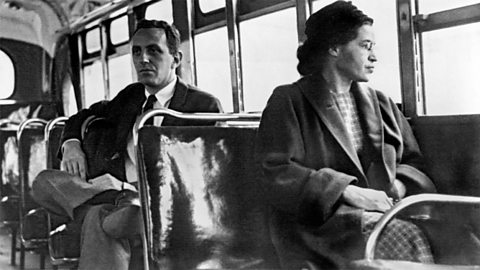
Rosa Parks
Segregation laws in Montgomery stated that when a bus was full the black passengers must stand and give their seat to a white passenger.
However, Parks refused to give up her seat and was subsequently arrested.
Events
Park’s actions sparked a boycott (avoidance) of buses in Montgomery by the African American population.
Throughout the boycott Martin Luther King led the protests against segregation on Montgomery’s bus system.
This affected the income of the bus company, as around 60 to 70 per cent of customers had been African Americans.
Impact
The courts decided that the segregated nature of Montgomery’s buses was unconstitutional and ordered that they be desegregated.
- The boycott demonstrated the economic power of African Americans when they worked together.
- It also highlighted the effectiveness of non-violence.
- However, this did not get rid of segregation. White-only restaurants and theatres still existed in Montgomery and across all the southern states.
