Assembling plastics
As with woods and metals, there are specific permanent and non-permanent methods used to join and assemble plastics.
Permanent
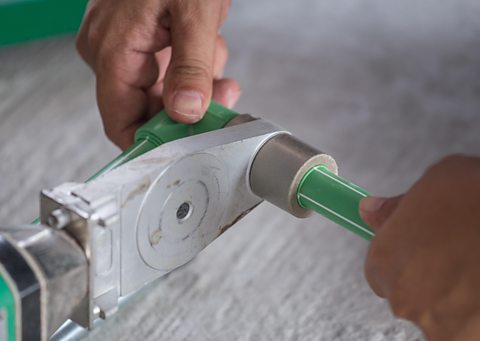
There several ways for joining plastics together in a permanent way.
Riveting is means of joining two pieces of material together through aligned drill holes in both bits of material. The rivet is the component that fastens them. The rivet is hammered or forced into the aligned holes. In the process it deforms and expands to hold the two pieces of metal together.
Contact adhesives are used to bond materials together. They can come in several forms. It can be a singular tube of glue strong enough to bind two bits of different material securely. It can be two separate tubes, one an acting agent and the other the bonding agent that will only work when the two are mixed or come into contact. Contact adhesives can be very fast acting and strong.
Solvent cements work in a different way to adhesives. The solvent is applied to surfaces to create a seal between two materials through acid corrosion. The materials are joined together when the layers of the materials melt and fuse together.
Plastic welding is a process similar to welding metal – a filler plastic is heated and used to fuse two plastics together
Non-permanent
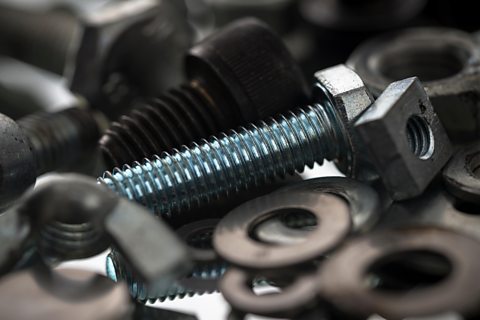
Nut and bolts are a metal fastening device used to join two pieces of material together through aligned drill holes in both bits of material. The bolt fits through the holes and the nuts holds it in place. The benefit of nuts and bolts is that they can be easily removed.
Screws, like nuts and bolts, are a metal fastening that connects two bits of material together. Screws do this by carving a thread into the material that holds them secure. Like nuts and bolts, they can be easily removed.
