Natural selection
Living organisms are adapted to their environments in order to survive.
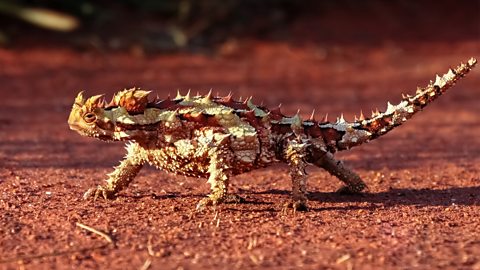
Image caption, Thorny devil
The thorny devil is a lizard native to the Australian Outback. In between its scales are microscopic channels that catch and carry water. By opening and closing their mouth, they drink through their scales like sipping through a series of straws.
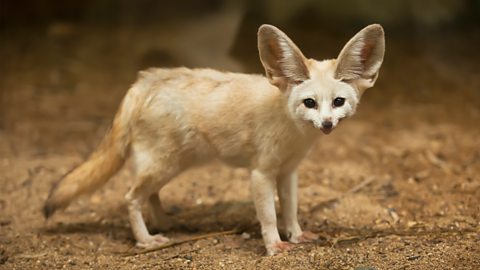
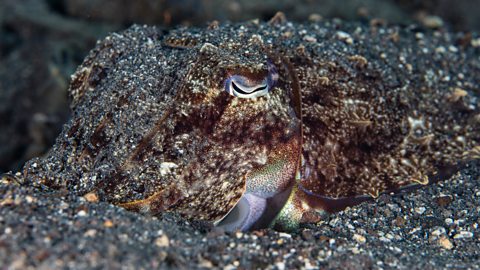
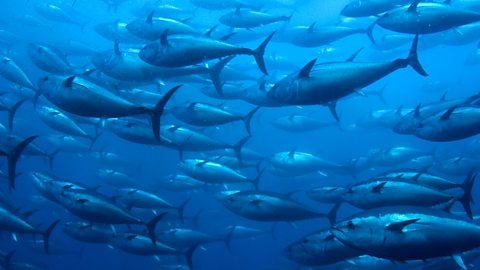
1 of 4
End of image gallery
Competition makes these adaptations for survival very important. Only the best adapted will survive.
The theory of natural selection – Charles Darwin
- There is variation among the The visible characteristics of an organism which occur as a result of its genes. of individuals in a population.
- Competition (for food, mates etc) causes a struggle for existence.
- The best-adapted individuals survive and the less well-adapted individuals do not survive – this is differential survival.
- The surviving phenotype (the fittest) is able to reproduce.
- The surviving phenotype passes it’s beneficial gene to the next generation.
