Environmental factors
An organism’s surroundings (abiotic and biotic factors) can influence its distribution.
Abiotic (non-living) factors
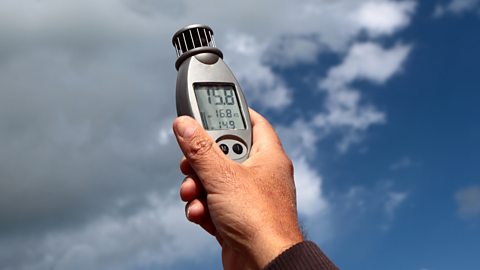
Image caption, Wind speed
Wind speed is measured with an anemometer. It affects the rate of water loss by plants and therefore affects their survival rates in exposed areas.
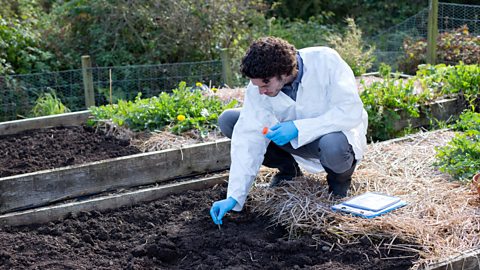
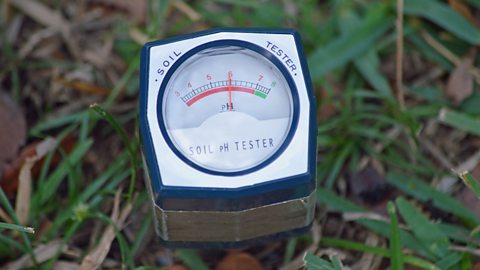
Image caption, Water/soil moisture levels
Water/soil moisture levels are measured by finding the mass of a soil sample, drying the sample in an oven and reweighing. The difference in mass gives an indication of the percentage soil moisture. It affects the survival and therefore distribution of plants and animals.

Image caption, pH levels
pH levels are measured using a pH probe. It affects the survival and therefore distribution of plants. Most plants prefer neutral conditions but some will only grow in acidic or alkaline conditions.

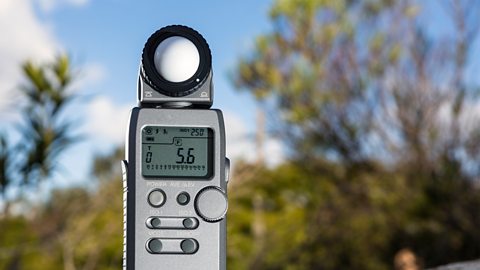
Image caption, Light
Light is measured using a light meter. It affects the survival and therefore distribution of plants. All plants need light to photosynthesise but some can survive with less than others.

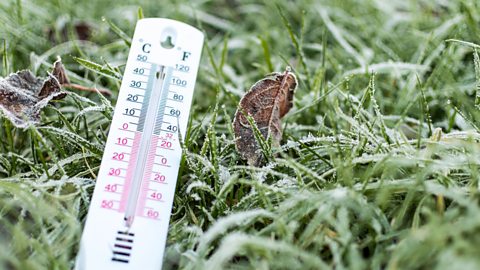
Image caption, Temperature
Temperature is measured with a thermometer. It affects the rate of cell reactions like photosynthesis and diffusion.
1 of 5
Biotic (living) factors
Other plants and animals can affect the distribution of an organism.
The effect of a predator on its prey is one example. If predator numbers are high, prey numbers will decrease.
Another example is competition for food - if there is not enough food the death of one organism can occur.
Biotic factors are much more difficult to measure than abiotic.