Plant adaptations - xerophytic
Plants with adaptations which allow them to live in hot and dry conditions are called A type of plant that has adapted to living in a dry habitat such as a desert.. The following A feature of an organism's body which helps it to survive. allow plants to survive in the hot desert environment:
- Small leaves - these ensure that less water is lost from the plant by The loss of water from leaves by evaporation through the stomata. because the leaf has a smaller surface area.
- Tap roots - these are long roots (7-10 metres long) that reach deep under the ground to access water supplies. The tap roots are much longer and bigger than the plant which is visible at the surface.
- Spines - some plants have spines instead of leaves eg cacti. Spines lose less water than leaves so are very efficient in a hot climate. Spines also prevent animals from eating the plant.
- Waxy skin - some leaves have a thick, waxy skin on their surface. This reduces water loss by The loss of water from leaves by evaporation through the stomata..
- Water storage - some plants, known as succulents, store water in their stems, leaves, roots or even fruits. Plants which store water in their leaves and stems also have a thick waxy skin so that they lose less water by transpiration.
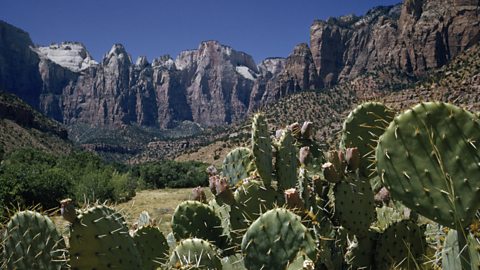
Image caption, Cacti
Cactus plants have spines to reduce water loss.
1 of 3
End of image gallery
