Developments in public health since the mid-20th century
In the modern era, governments have tried to improve public health in more and more ways.
Campaigns to improve public health
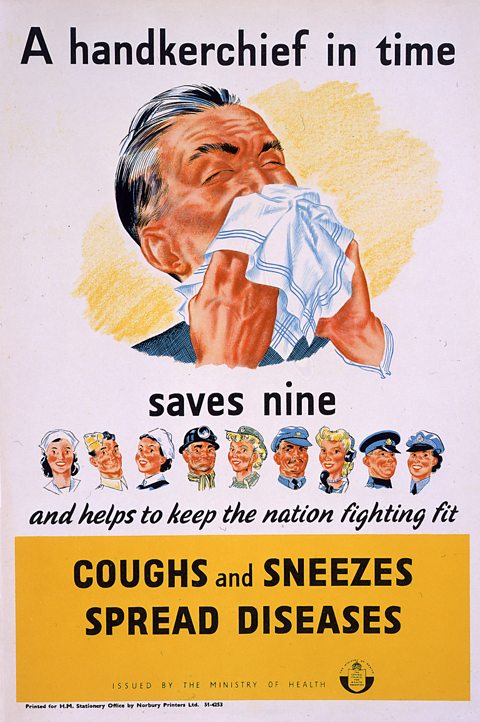
The Labour government of 1945-51 created the National Health Service (NHS) in 1948. As well as running hospitals and local health centres, the NHS promotes public health through a range of activities:
- Health workers go into schools to speak to students, eg to give vaccines or talks on sex education.
- Health visitors visit new parents to give help and advice on child care.
- There have been all sorts of campaigns to promote healthier lifestyles, such as giving up smoking (Smokefree), eating healthily (Change4Life and 5 A Day) and taking exercise (Walking for Health).
- Other campaigns have encouraged personal hygiene (eg regular brushing of teeth and checking for nits) as a way to achieve better health.
Clean water from reservoirs in Wales
The rapid growth of the industrial towns and cities of the Midlands and North West England led to a shortage of clean drinking water. This was because local water sources no longer provided enough water to meet demand. To maintain a high level of public health, it was necessary to find new sources of drinkable water. Controversy arose from the loss or displacement of Welsh speaking farming communities between 1880 and the 1960s, when valleys were flooded to provide drinking water to Liverpool and the Midlands.
Lake Vyrnwy
The Liverpool Corporation wanted to improve its water supply. Therefore, between 1881 and 1888, the largest masonry dam in Britain was built in north Wales, in the Vyrnwy Valley, to supply Liverpool with fresh water.
Elan Valley reservoir
The Birmingham Corporation organised the building of a reservoir in the Elan Valley, to the west of Rhayader in mid-Wales, to ensure clean drinking water for the Midlands.
Llyn Celyn
In 1955, the Liverpool Corporation chose Tryweryn, to the north of Bala, for a new reservoir for its water supply.
Improvements in life expectancy
During the 20th and early 21st centuries huge strides have been made in public health and hygiene. The average number of years a person is expected to live depending on where they live. has risen more rapidly than in any previous century, from just under 50 in 1900 to over 80 today. In other words, during the 20th century, for each decade that passed, life expectancy rose by two and a half years.
Despite great progress in the past 100 years, huge problems remain. As Britain has grown wealthier, the diets of many people have become less healthy. As a result, there has been a large rise in obesity and diseases associated with it, eg diabetes.
In spite of numerous health campaigns, many people still smoke, drink too much alcohol and take too little exercise. Poverty and poor housing are not as serious problems as they were in past centuries. However, they continue to have negative effects on public health.
