Still life
Setting up an effective still life
Still life is a broad term in art that can include many subjects. Anything that doesn’t move on its own - any inanimate object - can be used in still life art. Artists have been inspired by still life throughout history and it is still a popular theme today.

A student's still life artwork
Think about how to choose, set up and arrange objects for a still life. Here are some ideas to help:
- use an odd number of items
- include objects of different shapes, sizes and textures
- use objects that have things in common
- overlap objects
- consider a balance of pattern and colour
- think about what the viewer’s eye will look at first and how it will move around the picture
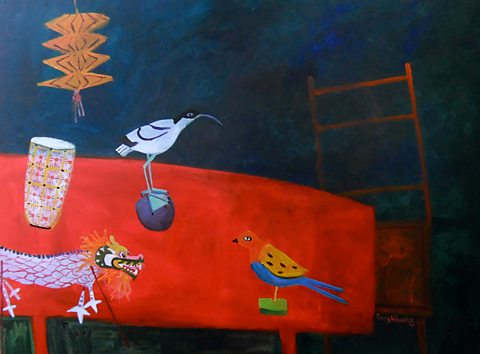
The Elephant in the Room by Jenny Wheatley
Scale, shape and composition
Scale means the size of the objects in a still life arrangement. Composition refers to how each of the objects are brought together and arranged.
A sense of scale can be created by choosing large objects and placing them next to smaller ones.
