Migration
Migration can be used to avoid adverse conditions and therefore avoid metabolic adversity. This involves expending energy to relocate to an environment that is more suitable.
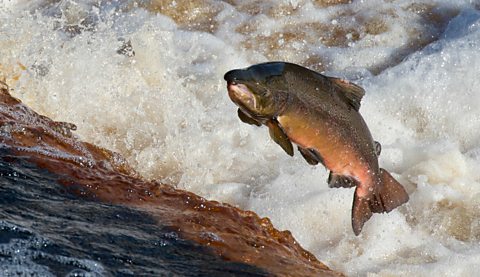
An Atlantic salmon displaying migratory behaviour
Examples include birds migrating during different seasons, wildebeest migrating annually for rich grazing grounds and Atlantic salmon moving between freshwater and saltwater during their lifecycle.
Migratory behaviour can be influenced by innate (instinctive) or learned behaviours. Some birds, like the bar-tailed godwit, have an instinctive ability to migrate at birth. Some, however, must follow their parents to migrate and learn their route for future years.
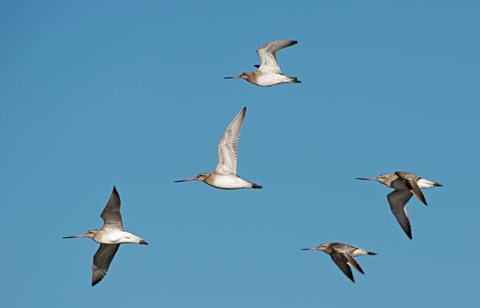
Migratory behaviour is innate (instinctive) for bar-tailed godwits. Other birds must learn to migrate.
