Setting and script notes
The script will also give you details about the setting - or settings if a number of scene changes are needed. There could also be information about design, props and costume.
This is an extract from the setting instructions for My Mother Said I Never Should:
The action takes place in Manchester, Oldham and London. The setting should be naturalistic. The ideal design is an empty space although the piano can effectively remain on stage throughout Acts One and Two. There are no sofas or furniture in this play. The setting should simply be a magic place where the characters can make contact with the earth… Each girl is dressed contemporary to her own generation…
Charlotte Keatley also gives specific direction around the characters themselves which serves as a warning to the director and performers:
There are no cute, little girls in this play. The children are fearsome and courageous (as children are) and to depict them otherwise in the play or on posters is to misrepresent the adults of whom they are the core.
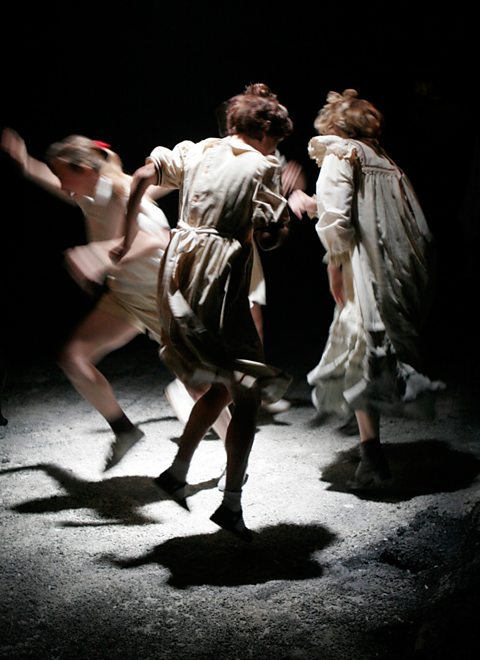
Credit: George Coupe
Sometimes, particularly in a short play, the action is continuous, but if there are any crucial changes in the time frame, they will be explained. Scene changes and time changes are normally marked as breaks in the action, dividing it into acts and sometimes scenes within those acts. Charlotte Keatley notes:
There is an interval between Act Two and Act Three.
