Polymers
Polymers are made by chemical reactions that join lots of small molecules together to make long molecules. For example, a molecule of poly(ethene) is made by joining thousands of ethene molecules together. Long molecules like these give polymers their properties.
Ethene molecules join together to make long molecules of poly(ethene)
Polymer properties
Polymers often have these properties in common. They are:
- chemically unreactive
- solids at room temperature
- plastic – they can be moulded into shape
- electrical insulators
- strong and hard-wearing
The table shows some polymers, their typical uses and the properties that make them suitable for these uses:
| Polymer name | Typical use | Properties |
| Poly(ethene) or polythene | Plastic bags | Strong and hard-wearing |
| PVC | Water pipes | Strong, hard-wearing, chemically unreactive |
| PVC | Outer layer of electric wires | Electrical insulator, hard-wearing |
| Nylon | Clothing | Can be made into fibres, strong and flexible |
| Lycra | Sports clothing | Can be made into fibres, very elastic and tough |
| Polymer name | Poly(ethene) or polythene |
|---|---|
| Typical use | Plastic bags |
| Properties | Strong and hard-wearing |
| Polymer name | PVC |
|---|---|
| Typical use | Water pipes |
| Properties | Strong, hard-wearing, chemically unreactive |
| Polymer name | PVC |
|---|---|
| Typical use | Outer layer of electric wires |
| Properties | Electrical insulator, hard-wearing |
| Polymer name | Nylon |
|---|---|
| Typical use | Clothing |
| Properties | Can be made into fibres, strong and flexible |
| Polymer name | Lycra |
|---|---|
| Typical use | Sports clothing |
| Properties | Can be made into fibres, very elastic and tough |
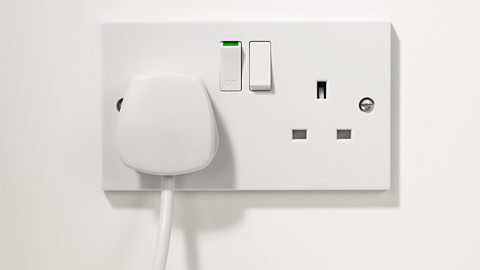
Some polymers are hard and rigid, like the polymer used to make this electrical socket
Polymer problems
Polymers are usually chemically unreactive. This is a useful property because it means that plastic bottles will not react with their contents. Unfortunately, it makes polymers difficult to dispose of. They do not rot away very quickly and they can cause litter problems.
