Representation in print
In print based media texts representation is constructed using:
- The way that a page or document is set out with specific places for pieces of text or images. and Design
- Language and The ways in which a media text uses language to speak to its target audience - for example, formal or informal.
- Camera shots and angles in any photographs
- Visual codes
- Words that go along with images to give meaning to them in a specific context; includes captions in newspapers and taglines on film posters.
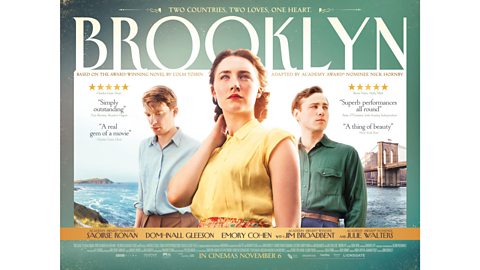
The film poster for "Brooklyn" contains a number of different representations.
In this poster for the film Brooklyn, there are representations of gender, place and the past.
The style of font used (design) along with the costumes worn by the three characters (visual codes), and the colours used reflect the 1950s when the film is set. Taken together, the colours and images are soft and warm, and represent the past in a nostalgic way; this is a romantic, idealised representation of the past (mode of address).
Gender is represented by the positioning of the three characters (layout): the main character Eilis (Saoirse Ronan) is in the middle of the poster and shown from a low angle (camera shots), and she looks directly ahead of her, over the heads of anyone looking at the poster.
These elements combine to represent her as a strong, confident female who is at the centre of this story.
The layout also emphasises that the story has two sides which is represented by the two men pictured and the images behind them.
The left hand side of the poster features a picture of Jim (Domnhall Gleeson): he is pictured against the rugged Irish coast and is looking down and to the left (visual codes). In this way, he represents Eilis's past in Ireland.
The right hand side features Tony (Emory Cohen), Eilis’ love interest in America, and he is looking up and to the right. He is pictured against the towering Brooklyn Bridge - this represents Eilis' life in Amercia and maybe her future as well.
The tag line at the top of the poster - ‘Two countries, two loves, one heart’ - anchors (anchorage) the images and gives the audience an idea of what the film is representing: romantic love.
