Poverty in Glasgow
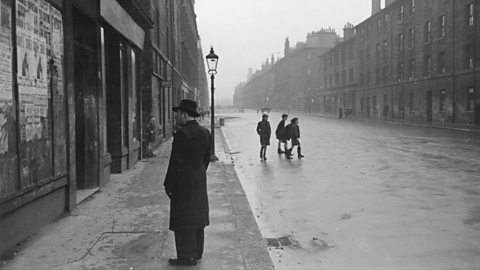
The play begins in 1936. The 1930s were a time of economic depression. There was mass unemployment and many people from the working class lived in poverty and in poor housing.
Children played on the street and were content with simple games. For example, Hughie plays football and marbles on the street.
The Devlins are working class and are on the brink of poverty:
- Hughie is described as
scruffy looking
- Franco gives Bridget a charm, but she has no jewellery to put it on
- Bridget has to borrow money from Massimo to pay for the abortion
Poverty was rife in Glasgow at this time. The global depression of the 1930s had a deep impact on Scotland’s economy.
There were limited job opportunities. This is clear when Rosinella says Franco's options are:
The pits or the steelworks - that's all there is around here.
These opportunities were often dangerous, which is reflected by Adam Devlin's death in the pits.
