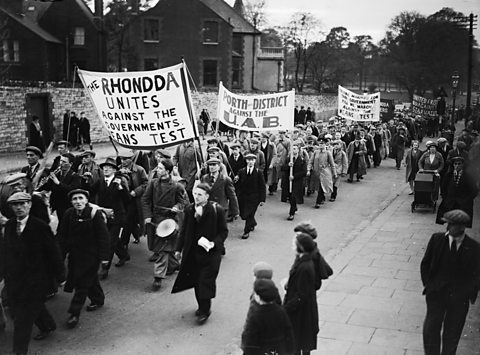
The dole and the Means Test
People who lost their jobs depended on unemployment benefit, otherwise known as the dole. A person without work was entitled to benefit from the unemployment insurance scheme for the first six months.
However, to cut costs, the government introduced the Means Test in 1931. Officials visited families to assess whether they were entitled to help. This involved finding out how much the families earned or possessed.
In order to qualify for dole, a worker had to pass the Means Test, and the sum paid to each family would be based on this test.
The test created many problems for families. Tensions were caused because, if an older child had some work, or a mother had a part-time job, or a grandparent was living in the house without paying rent, the Means Test could result in dole being refused. Something of special value handed down through generations. and items such as pianos had to be sold, and savings spent before the dole was received.
To make matters even worse, the dole was cut by 10 per cent in 1931.