Environmental, social and economic issues
There are several methods that designers can utilise to help create a more sustainable product, including:
- Fair trade helps to make global trade fairer by ensuring that workers and farmers in developing countries receive better prices, improved rights and working conditions.
- An action to counteract carbon dioxide production.
- product disassembly
- disposal of waste
Fair trade
Fair trade helps disadvantaged farmers or producers in developing countries by promoting fair trading conditions and combatting poverty.
'Fairtrade' certifies products that meet high economic, environmental and social standards. Farmers will have received a fair price for their product and have decent working conditions.
Carbon offsetting
All manufacturers use energy, the level of which can be measured through their A measure of how much carbon is used through the activities of a person, company or country.. A carbon footprint is a number, often measured in grams, kilograms or tonnes, that represents the total amount of carbon dioxide (CO₂) and other equivalent greenhouse gases that are associated with an individual, product, person or even country. The bigger a product’s carbon footprint, the larger its contribution to The rise in the average temperature of the Earth's surface. .
Companies can utilise carbon offsetting schemes to reduce the amount of energy they use, eg encouraging staff to use public transport, electric vehicles, walk or cycle to work, using Power that is generated using natural resources that will not run out, eg wind and wave power. or planting trees.

Product disassembly
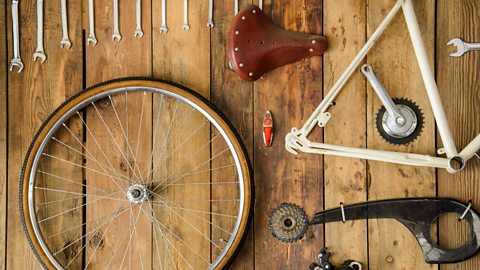
When creating products, companies can use parts that can be To break down and process so a new material is produced - one of the 6 Rs., or To use a product again rather than replacing with a new one - one of the 6 Rs. by disassembly, or that will Ability to biologically break down. when sent to landfill. Products made from several materials and components are difficult to recycle as it is difficult to separate the parts. Also, products that can be repaired or improved are likely to last longer.
Disposal of waste
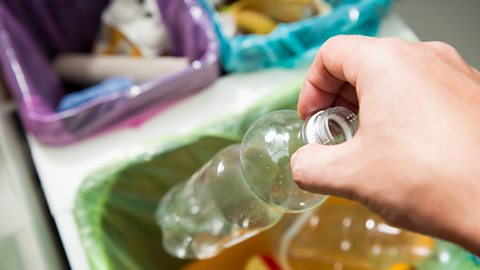
It is important to reduce the amount of waste materials created in the manufacture of a product to ensure minimal impact on the environment. When a product wears out or is replaced, it should be disposed of in the most environmentally friendly way possible.
More guides on this topic
- New and emerging technologies - Edexcel
- Energy generation and storage - Edexcel
- Developments in modern materials - Edexcel
- Electronic systems - Edexcel
- Mechanical devices - Edexcel
- Material categories and properties - Edexcel
- Design contexts - Edexcel
- Investigating past work - Edexcel
- Design strategies - Edexcel
- Communication of ideas - Edexcel
