Templates, jigs and patterns
Tools can be used by A person or company that makes something from raw materials or from an assembly of component parts. to ensure identical products are produced efficiently and to a high quality. These include:
- Something that can be drawn around to mark a shape onto material, so that it can be cut or shaped repeatedly and accurately.
- A collection of shapes that are attached to the surface of the material to aid shaping it repeatedly and accurately.
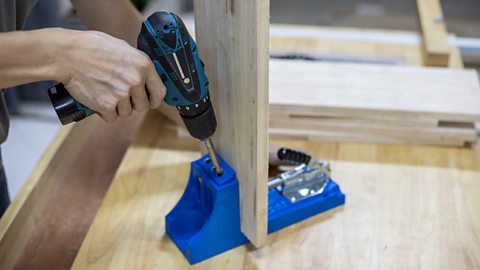
- A tool used to aid the repetition of a process and/or to hold a work in place.
Templates
A template is a tool used to mark out shapes repeatedly. For example, if 100 acrylic keyrings are all to be shaped so they are the same, a template could be made to draw around for speed and consistency.
Patterns
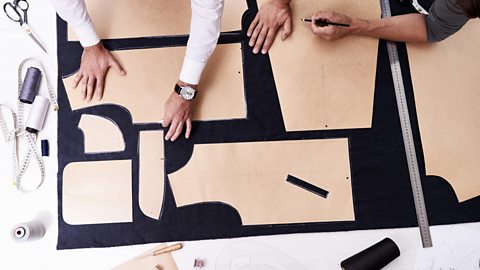
A pattern is a collection of shapes (similar to a template) that are attached to the surface of the material to aid shaping it. For example, a tailor making a garment could use a pattern to mark the required shapes for the garment onto a piece of fabric to then be cut out and assembled.
Jigs
A jig is device used to hold a piece of material and guide cutting tools and they are used to ensure the process can be repeated accurately and to a high quality. For example, a carpenter making a hole of a specific alignment and depth may use a jig to aid accuracy.