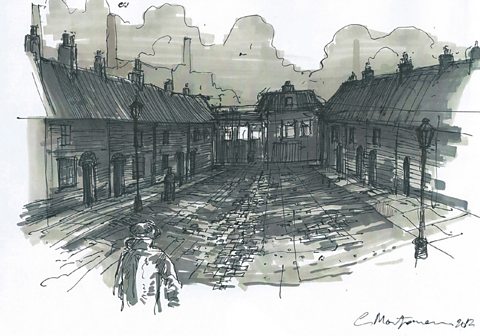
Considering colour, condition, practicalities and scale
When designing a set, there are several aspects to consider, including:
- colour
- condition
- practicalities
- scale
Colour
Colour can be used within set design to symbolise various ideas on stage. For example, a set designer might make a Victorian schoolhouse look stricter by using dull greys and a Using only one colour. palette.
Condition
The condition of a design can reveal important information about the setting or a character’s circumstances. For example, a living room with tatty, ripped curtains and stained carpets might suggest that the house is old or that the character who lives there is poor.
Practicalities
A set designer will need to consider the practical aspects of set design. If the play has lots of fast-paced scenes in various locations, set design may need to be kept minimal to help with the quick changes.
Scale
A set designer can experiment with scale to create different effects on stage. A design technique used to make an object appear either further away or closer than it is in reality. is a design technique used to make an object appear either further away or closer than it is in reality. For example, a scene set on a street could feature a row of houses on both sides of the stage, and those further from the audience can be smaller to create an optical illusion, making the road appear longer.