The Potsdam Conference, 1945
Objectives:
The main objective of the Potsdam Conference was to finalise a post-war settlement and put into action all the things agreed at Yalta. While the meeting at Yalta had been reasonably friendly, the Potsdam Conference was fraught with disagreements, which were the result of some significant changes that had taken place since the Yalta Conference.
1. A new US President:
The US President, Franklin D Roosevelt, had died and been replaced by his Vice-President, Harry S Truman. While Roosevelt had been willing to work with Stalin, largely because he needed the Union of Soviet Socialist Republics - collection of states, also known as the Soviet Union. to join the war against Japan, Truman made little secret of his dislike for A classless society where all property is owned publicly. and for Stalin personally. Truman remarked that he was tired of babying the Soviets
and that the only language Stalin understood was how many army divisions do you have?
.
2. Nuclear threat:
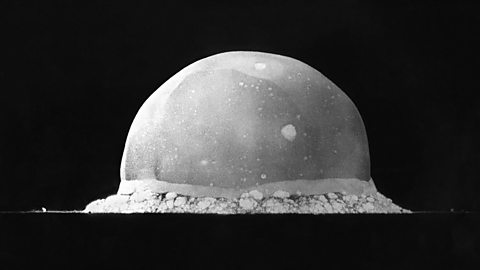
Just before the Conference began, on 16 July 1945, the USA had successfully exploded an A powerful and destructive bomb that gets its power from the energy released when atoms are split. at their test site in the New Mexico desert. When first told about the success of the experiment, Truman is said to have remarked: if it works.. I’ll sure have a hammer on those boys.
At Potsdam, Truman chose to inform Stalin that the US possessed a new weapon of unusual destructive force
.
3. Expansion of communism:
Despite agreeing at Yalta that free elections would be held in Eastern Europe after the defeat of Nazi Germany, there was little evidence at Potsdam that Stalin intended to allow them. In fact the Army of the USSR. was in control of Poland and the USSR was in the process of setting up a A classless society where all property is owned publicly. government.
Outcome:
Little real progress was made at Potsdam beyond an agreement to put into action the commitments made at Yalta.
The main points of the two Conferences are summarised in the table below. You can use the acronym PEER – People, Elections, Europe, Reparations to remember the main points.
| Yalta | Potsdam |
| Participants: Churchill, Roosevelt and Stalin. | Participants: Churchill (replaced midway by Attlee), Truman and Stalin. |
| Germany to be divided into four zones of occupation - Berlin to also be divided. | Arguments over where the boundaries between the zones would be drawn. |
| The USSR would be allowed to take reparations from defeated Germany. | Arguments about how much the USSR should be allowed to take in reparations. It was agreed that the Soviets could take whatever they wanted from the Soviet controlled zone and 10 per cent from the Western zones. This remained a source of disagreement, with the Western Allies worried that they were repeating the mistakes of the Treaty of Versailles after World War One. |
| Stalin to have a ‘sphere of influence’ over Eastern Europe but all countries freed from Nazi occupation would be allowed free elections to choose their own governments. | There was no sign of Stalin allowing free elections in Eastern Europe and a communist government was being set up in Poland. |
| Yalta | Participants: Churchill, Roosevelt and Stalin. |
|---|---|
| Potsdam | Participants: Churchill (replaced midway by Attlee), Truman and Stalin. |
| Yalta | Germany to be divided into four zones of occupation - Berlin to also be divided. |
|---|---|
| Potsdam | Arguments over where the boundaries between the zones would be drawn. |
| Yalta | The USSR would be allowed to take reparations from defeated Germany. |
|---|---|
| Potsdam | Arguments about how much the USSR should be allowed to take in reparations. It was agreed that the Soviets could take whatever they wanted from the Soviet controlled zone and 10 per cent from the Western zones. This remained a source of disagreement, with the Western Allies worried that they were repeating the mistakes of the Treaty of Versailles after World War One. |
| Yalta | Stalin to have a ‘sphere of influence’ over Eastern Europe but all countries freed from Nazi occupation would be allowed free elections to choose their own governments. |
|---|---|
| Potsdam | There was no sign of Stalin allowing free elections in Eastern Europe and a communist government was being set up in Poland. |
