Conscription
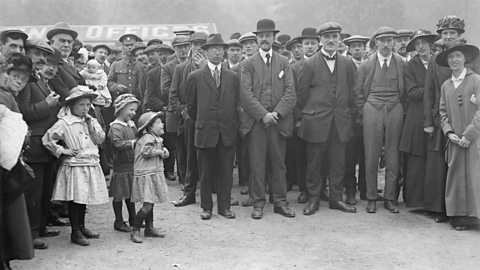
In 1914, Britain had the only army that was entirely made up of volunteers. Every other country used conscription - compulsory service in military - to increase the size of their armies.
However, faced with the reality of a long war with high casualties, the UK government passed the Military Service Act in January 1916, which began conscription for single men from nineteen to forty one years old.
In May 1916 conscription was extended to married men and by 1918 men up to the age of fifty were being conscripted - they were forced to join.
Exemption from service
The Military Service Act of 1916 made allowances for some men to be excused from military service on the grounds of being weak or in ill health, or being engaged in vital war work such as coal mining.
The most controversial exemption from military service was refusal to fight on grounds of conscience. These ‘conscientious objectors’ claimed exemption on grounds of their pacifist, political or religious beliefs.
