Hard engineering strategies - advantages and disadvantages
The wearing away of pieces of rock, soil or other solid materials. is a natural process which shapes A vertical rock face.. Over time, erosion can cause cliff collapse - therefore the coastline needs to be managed. The use of man-made structures to control the coast. involves building artificial structures which try to control natural processes. Each engineering strategy has its advantages and disadvantages.
Sea walls
Sea walls are concrete walls that are placed at the foot of a cliff to prevent erosion. They are curved to reflect the wave energy back into the sea.
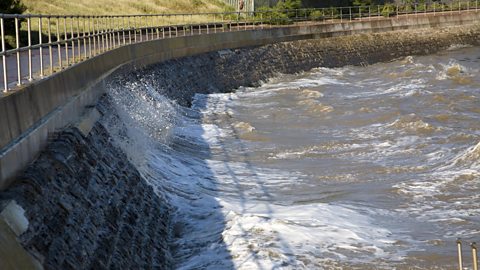
Advantages
- Effective at protecting the base of the cliff.
- Sea walls usually have promenades so people can walk along them.
Disadvantages
- Waves are still powerful and can break down and erode the sea wall.
- Expensive - approximately £2,000 per metre.
Rock armour
Rock armour is large boulders placed at the foot of a cliff. They break the waves and absorb their energy.
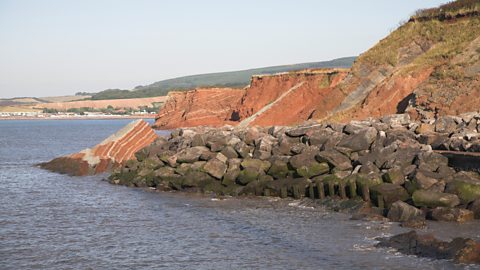
Advantages
- Cheaper than a sea wall and easy to maintain.
- Can be used for fishing.
Disadvantages
- They look different to the local geology, as the rock has been imported from other areas.
- The rocks are expensive to transport.
- Can gather rubbish and look unsightly.
Gabions
Rocks are held in mesh cages and placed in areas affected by erosion.
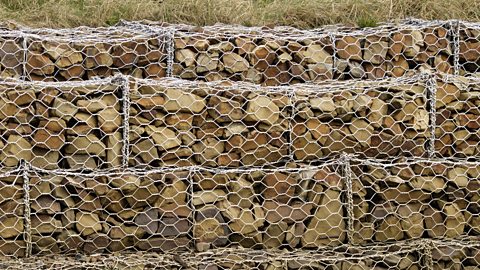
Advantages
- Cheap - approximately £100 per metre.
- Absorb wave energy.
Disadvantages
- Not very strong.
- Look unnatural.
Groynes
Wooden or rock structures built out at right angles into the sea.
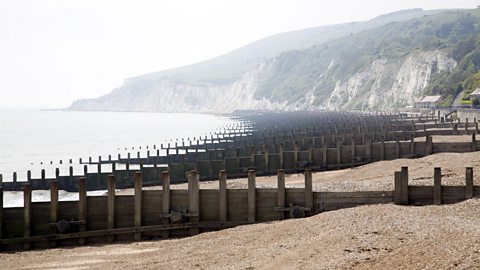
Advantages
- They build a beach - which encourages tourism.
- They trap sediment being carried by longshore drift.
Disadvantages
- By trapping sediment they starve beaches further down the coastline, increasing rates of erosion elsewhere.
- They look unattractive.
