Africans in Tudor England
From what we can tell, Africans living in Period of history spanning the Tudor dynasty of monarchs ruling England between 1485-1603. lived quiet lives in a range of occupations, including court trumpeter, shoemaker, needlemaker and servant. We also know that some came from North Africa.
After the The 16th century religious revolution that led to the establishment of the Protestant churches., when King Henry VIII rejected the The institution of Catholic Christianity headed by the Pope. All of western Europe belonged to the Catholic Church until the Reformation, when Protestants broke away., relations between the English and North African Muslim governments were good because they had a common enemy: the Catholic Spanish A country ruled by a king or queen., whose forces had re-conquered Spain from its previous Moorish Muslim rulers.
Other African A person who arrives from another country. were The system of trade between Britain, Africa and the Americas that depended on the transportation of enslaved Africans. who had come directly from Spain. They may, like one of the attendants of Queen Catherine of Aragon, have been Muslims who converted to Christianity.
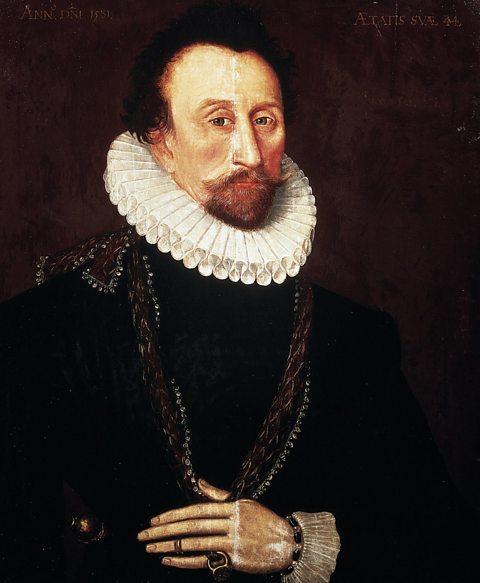
Although the state-sponsored pirates Hawkins and Drake had begun to be involved in the Portuguese trade in enslaved Africans, black people living in England were free. Prejudiced attitudes existed, but ideas about difference were often shaped more by religion and culture than by modern concepts of race.
- In the 1590s, proposals were made to remove some black residents from England, but there is little evidence that these measures were widely carried out
- when lawyers objected to a black diver giving evidence in court, his rights were upheld
- when John Blanke, one of King Henry VIII’s trumpeters, asked for a pay rise the King granted it. Henry also gave Blanke and his bride a wedding gift
Religious allegiance was often more politically significant than ethnic heritage in Tudor England, and Christians whose religious leader is the Pope. faced particularly harsh persecution under Elizabeth I.
More guides on this topic
- Migrants to Britain c1250 to the present overview - Cambridge OCR B
- Medieval England 1250-1500 overview - Cambridge OCR B
- Attitudes towards migrants in medieval England - Cambridge OCR B
- The diversity of medieval migrant communities - Cambridge OCR B
- Jewish communities and their expulsion from England in 1290 - OCR B
- Early Modern Britain and the world, 1500-1750 overview - OCR B
- The diversity of other European migrants, 1500-1750 - Cambridge OCR B
- The Huguenots and other Protestant refugees, 1500-1750 - OCR B
- Industrial Britain, 1750-1900 overview - Cambridge OCR B
- The diversity of European migrants, 1750-1900 - Cambridge OCR B
- The growth of Asian and African communities, 1750-1900 - OCR B
- Migration from Ireland, 1750-1900 - Cambridge OCR B
- Immigration in the Modern Era, 1900-present overview - Cambridge OCR B
- Refugees and ‘enemy aliens’ in the Modern Era, 1900 - 1947 - OCR B
- Commonwealth immigrants in the Modern Era, 1948-present - OCR B
- Economic migrants, refugees and asylum seekers, 1945 - present - OCR B
- Migrants to Britain, c1250 to the present - exam preparation - OCR B
