The contexts of An Inspector Calls
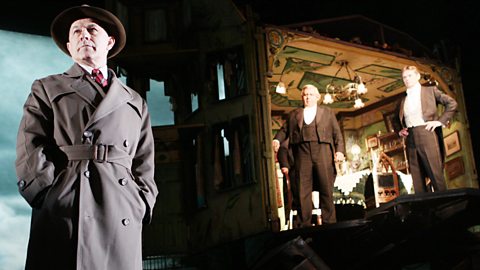
The context of a play is the circumstances in which it happens. This helps you to understand it. JB Priestley’s play, An Inspector Calls is set in 1912 but written in 1945. We need to remember that the play is set before both world wars and at a time when the British Empire was still a force to be reckoned with internationally.
The play is about an After the Victorian era, King Edward Vll reigned from 1901-1910, a brief period at the beginning of the 20th century before the First World War. family who are visited by a character who appears to be a police inspector. During the discussion that follows, it becomes clear that everyone in the family, including Gerald, the daughter’s fiancé, has contributed to the death of a young girl who took her own life after her treatment at their hands. She was sacked from two jobs, had two unfortunate love affairs and was turned away by a charity committee while pregnant. Pregnancy outside of marriage was greatly frowned upon in this period, another thing to consider when looking at the play’s context.
The play is made theatrically effective by the twists and turns in the story and an intriguing chain of events. It then asks questions about blame and personal responsibility, whether the girl actually existed and if the policeman is an imposter or even a spirit.
This is the key moral point of the play. Priestley’s message is that we all have a duty to society and it will collapse if we don’t honour that duty.
Class is also a very important theme in this play. The historical context is that class was still very rigid in Edwardian times and it was thought that the upper classes should never mix with the lower classes. This clip uses examples from the 2008 West End production of the play and explains the divide between the upper and lower classes.
