Ballad operas and Comic operas
There were some early forms of Musical theatre as we know it in existence in the 18th-century in Britain; these were operatic in style. There were two types, Ballad operas and Comic operas. These had original scores (music written especially) or borrowed popular melodies of the day. They were often based on famous stories or novels. Some were spoofs of existing operatic works. The most famous example of a Ballad opera is The Beggar’s Opera written in 1728 by John Gay. It’s believed by some to be the first musical. It’s a clear example of a ‘crossover’ and was transposed by Brecht and Kurt Weill into The Threepenny Opera in 1928.
Music Hall
In Britain and the United States musical comedies started to become a popular form of entertainment by the 1800s, alongside Music Hall. But whereas Music Hall was a mixture of short sketches and A short, stand-alone sketch that has a beginning, middle, end and meaning. A complete, mini story entire in itself. combining comic songs and stand-alone routines, a musical comedy had a clear narrative or storyline throughout. Music Hall used bawdy jokes (often the songs contained lots of rude innuendo) and was a relatively cheap and very popular form of entertainment for the working classes at that time.
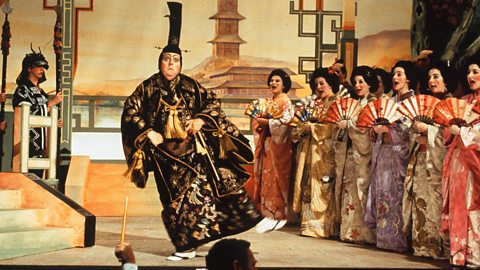
Musical comedies, however, employed a more sophisticated humour and appealed as much to the upper and middle classes. The storylines and content were much more family friendly and the set and production values lavish in comparison. A Musical theatre partnership called Gilbert and Sullivan was famous for producing many comic operas and musical comedies in the mid to late 1800s. Many of these are still performed today, such as The Mikado, HMS Pinafore and The Pirates of Penzance.