Five groovy facts about geese
Chances are, everyone's run across a group of geese before. They can be noisy, rowdy and are often seen flying in impressive, organised formation. But how much do you know about this band of birds?
Well, keep on reading and we'll have a gander at the goose-iest goss the animal kingdom has to offer!
1. Can geese fly?
Put simply, yes they can!
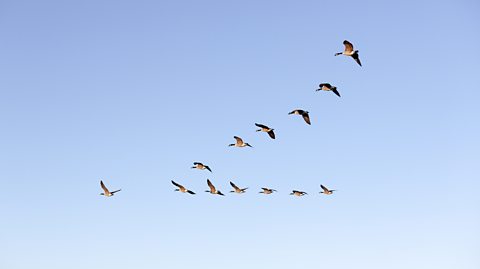
Geese usually fly in groups, adopting a V-shaped formation as they soar through the skies. This happens for a couple of reasons.
Firstly, this allows geese to conserve their energy, as each bird flies slightly above the one behind them - lowering wind resistance and making the flight easier. Geese take turns at which bird flies upfront, falling off to the back of the V when they get tired and need to recuperate energy.
Secondly, this allows the group to keep an eye on one another, keeping track of members of the group and making communication between birds easier and more coordinated.
2. What is a group of geese called?
Geese are a social bird, and don't play loosey-goosey when it comes to flock nor family!
The most common term for a group of geese is a gaggle, usually used to describe ground-bound geese or geese found in water. When in flight, a group of geese is usually called a wedge, a skein, or even a team!
Fancy a giggle with a gaggle? Well, you'll have to find at least five geese together, which is the generally accepted number for a gaggle of geese.
The name gaggle comes from a term used to describe a noisy, rowdy group of people - the kind you might see at a pub or concert. The name was given geese on account of their honking lack of social awareness, as when they are in a group, geese tend to be noisy, rowdy and a little disorderly.
3. What do geese eat?
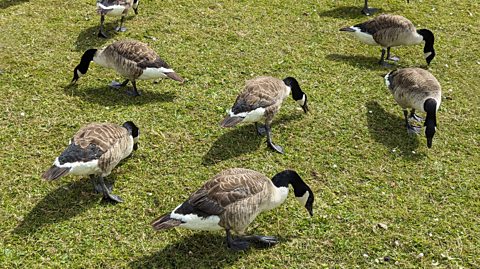
Geese are predominantly plant-eaters, so the bulk of their diet is made up by grass, seeds, wheat and aquatic plants, as well as the occasional berry plucked from a hedge. Geese do also delight on an insect from time to time, but this doesn't make up a large amount of their regular diet.
In terms of their culinary preferences, geese prefer to snack on shorter grass - allowing them to keep an eye out for any predators that might be lurking.
If you've ever fed a goose before, chances are you've handed them a few broken up bits of bread. But much like us, geese have a tendency to overdo it on bread and not leave room for any more nutritional foods. This can cause geese to become malnourished, and diminish their abilities to forage for their own food.
4. Why do geese migrate?
Geese tend to migrate to the UK in autumn, as a result of changing conditions in homelands like Svalbard, Greenland and Siberia affecting their ability to find food. The freezing frontiers in which geese usually spend their time become harder to live in as conditions cool, leading to skeins of geese taking to the sky in search of warmer climes.
Come late spring, however, when the temperature begins to warm again, geese will return to their breeding grounds, ready to repeat the cycle all over again.
Geese are not the only member of the bird family who migrate based on season, with fair weather birds frequently fleeing the UK during the winter to sun it up below the equator!
5. Why do geese honk?
Honks serve as the golden goose of gaggle communication, allowing geese to warn their group of predators, ward off intruders and respond to mates.
Honking is also used for communication between geese parents and their offspring, known as goslings.
Geese tend to make more noise in flight than they do on the ground. Researchers believe that the honking noise is used as a means to keep track of the skein, and co-ordinate their V-shaped formation whilst flying.
Where can I learn more about geese?
Gaggle-ing for more goose-based goss? Check out some more content on geese here:
