There are times when all you want to do is get away from the sofa, the TV, and any of life's major challenges and take a good long walk in the fresh air.
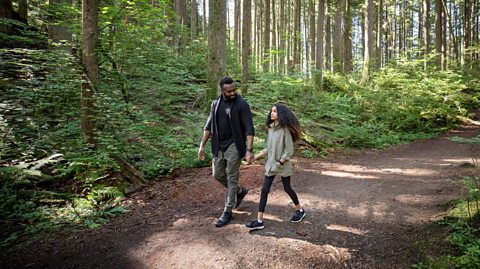
What you may not realise is how much of a favour you're doing for yourself, physically and mentally, by taking that lengthy stroll! We spoke to Dr William Bird MBE, a GP and huge walking advocate, to find out some interesting facts about walking, and what it does to our bodies.
It improves our immune system
When the world went through the Covid pandemic, it brought our immune systems - and their importance - into the spotlight. If you’ve been wondering how to improve the strength of yours, then look no further than a brisk walk.
Dr Bird explained how viruses look to attack our immune system when they enter our bodies. They target things such as natural killer cells or NKCs.
He said: “There's a lot of them in your nose, a lot of them in your gut, and a lot of them in your airways as well.” When a virus enters your body through any of these places, it comes across these NKCs.
But how do they work? Dr Bird explains: “Those natural killer cells don't know that virus at all as they've never seen it before, but they just know it's bad, so they kill it. And then eventually the rest of the immune system called the b cell immune system comes on board and starts creating antibodies.”
More NKCs means a faster immune response, and Dr Bird says “your natural killer cells are hugely increased by just going on a brisk walk.”
It helps calm internal inflammation which in turn helps with… pretty much everything
Dr Bird says that a lot of health issues we can suffer, both mental and physical, have chronic inflammation to blame. Inflammation is your body’s response to harm; it’s an attack against bad things in order to protect you. However, if there’s nothing like a virus to attack, this healing property can actually do lots of damage.
Dr Bird explains that “eating rubbish, not doing any exercise, and being stressed… all create what's called chronic inflammation in the immune system", and this is a huge contributing factor in lots of diseases we can fall ill to.

But walking does a number of things that helps calm this inflammation down. One of those is by releasing Proteins released by muscles during exercise. from the muscles - walking triggers this release, and then they travel round the body calming inflammation. Another is that walking targets something called visceral fat that sits around our organs. It helps get rid of it, thereby reducing inflammation.
It keeps our cellular batteries working properly
You might remember the phrase ‘mitochondria is the powerhouse of the cell’ from biology lessons, but do you remember why they’re so important?
Dr Bird says that, in essence, “they are the batteries, they power us. We are utterly 100% dependent on mitochondria, otherwise we'd stop working within a millisecond.”
And those mitochondria need to be exercised all the time - they’re designed to be constantly moving. If you keep them still, they stop working the way they should.
Dr Bird compares it to the batteries in your mobile phone: “When you charge your phone for too long the phone gets warm and, that warmth is electrons leaking out of the battery, which is why the battery doesn't last very long.
“So, just like a battery, when you sit there with loads of calories coming in, and no calories going out, you're overcharging the mitochondria.”
And when mitochondria are overcharged, they release unstable atoms known as free radicals. “Those free radicals cause untold damage, and guess what? They cause inflammation.”
By punctuating long periods of sitting down with walking, you’re helping to prevent these free radicals from escaping - like when you take your phone off charge when it’s at 100%.
It helps improve mental health
Okay, so this you may have heard this quite a lot, but do you know how walking actually helps our brains?
Dr Bird can explain: “When you're walking you release something called A protein secreted from the brain and other places in the body that helps keep neurons in your body healthy., or BDNF. The only thing that gets it out into the body is exercise - it's absolutely dependent on us moving around.
“Its amazing feat is that it actually untangles all the bits of the brain that have become all tangled up and broken.”
And, say it with me now - it helps reduce inflammation. Dr Bird says inflammation not only causes physical problems, but it can cause issues with our mental health too. So by walking and reducing it, you can help tackle things like anxiety and depression.
It can boost creativity
Aristotle, Nietshzhe, Kierkegaard - what do they all have in common? No, it’s not just that they’re great philosophers. They all apparently did their best thinking while walking!
Dr Bird refers to walking to get your creative juices flowing as the ‘philosopher’s walk’: “All the great philosophers used to do it, go for a walk, to do their thinking. And at the end of it you are far more likely to have got a good idea than if you've been sitting down, doing nothing.”
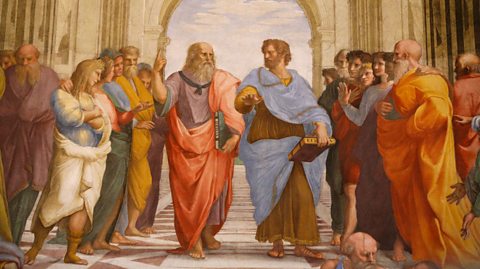
And they were quite open about how much it helped them - Friedrich Nietzsche wrote “All truly great thoughts are conceived by walking”, and the word for Aristotle’s school of philosophy, peripatetic, also means travelling and walking from place to place.
It can help strengthen and repair joints
Dr Bird says he’s come across the idea that joints only have a certain amount of wear and tear in them before they begin to weaken.
For that reason, some people are sceptical about using their joints too often, and can sometimes avoid walking.
But Dr Bird says the complete opposite is true: “The more you walk, the more you repair your cartilage, and the thicker the cartilage becomes and the stronger the joint becomes.”
It can help us live longer
Two researchers called Gianni Pes and Michel Poulain found that in Sardinia, and a number of other places, there seemed to be an incredible amount of centenarians (people who live to 100 and over). They named these areas ‘blue zones’, and set out to discover why people in them lived so long.
They discovered, through extensive interviewing of these elderly residents, nine different elements of their lifestyle that they all shared. One was that they were very family orientated, another was that they had a clear sense of purpose. But as Dr Bird explains: “the big one is that they all walk. None of them go to the gym.”
The researchers dubbed this element ‘natural movement’ - in essence, people who exercise in ways that we’ve evolved naturally to move, live longer, healthier lives.
This article was published in May 2021 and updated in May 2024
Can your dog help you jog?
Teach your dog to be the pawfect running companion.
Why now might be the perfect time to get on your bike
The number of people cycling during lockdown has doubled - but what are the benefits of riding a bike?
Why do we yawn? And four other bodily functions explained
We take a look at the weird things our bodies do on a daily basis.